
Many assume peak content performance demands a complete overhaul. This is simply untrue, and a massive waste. Instead, a strategic optimization of what you already have proves far more efficient. Refining content, rather than detonating it, yields considerable improvements. Expect enhanced search engine placement, heightened user interest, and amplified overall relevancy.
This article details actionable techniques. Optimize existing content, no blank page required. Uncover methods to spot areas ripe for enhancement. Fine-tune your SEO. Breathe new life into stale information. Amp up readability. Turn those underperforming pieces into traffic and conversion magnets.
Identify Content Optimization Opportunities
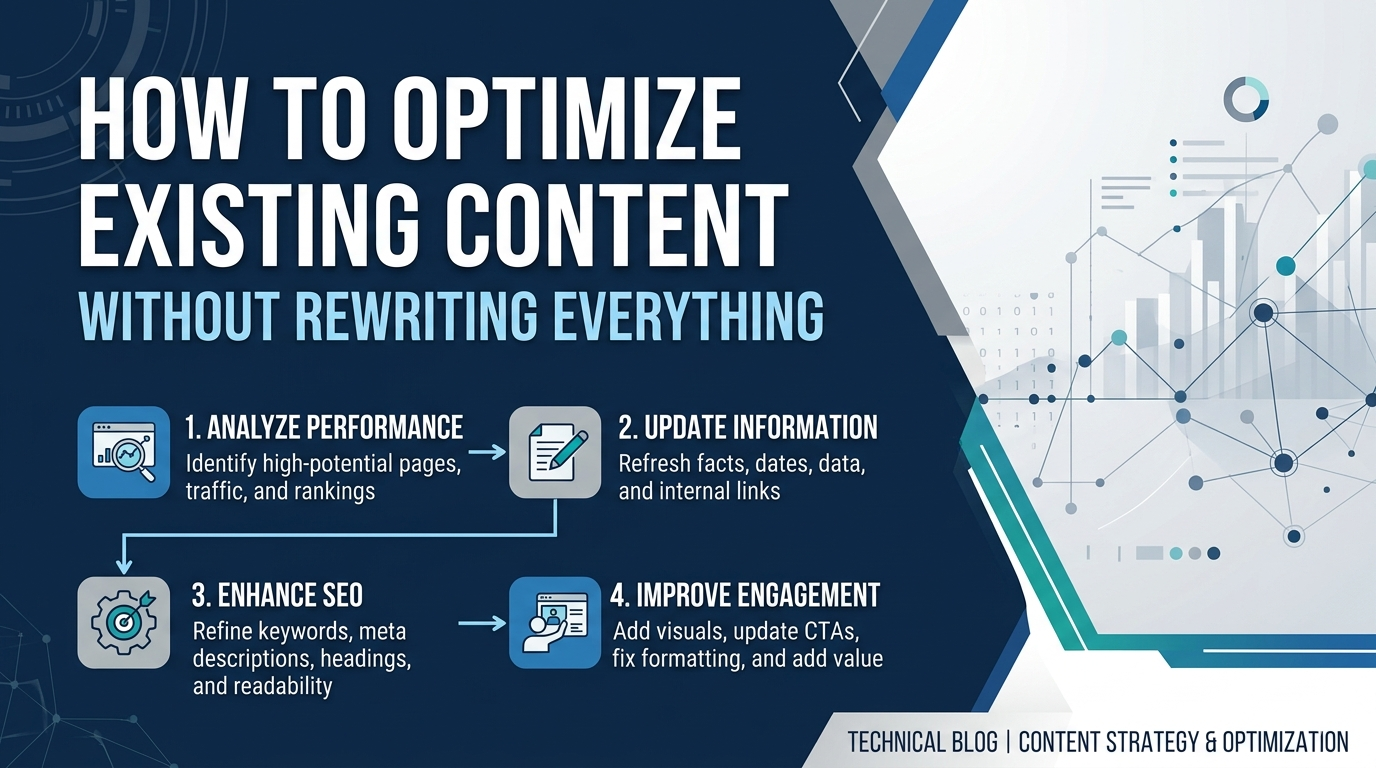
First, pinpoint content bursting with hidden potential. Not everything needs the same TLC. Prioritize efforts; focus on content poised for the biggest gains. Google Analytics is your friend. It holds a trove of data. Zero in on those underperforming pages. Watch for high bounce rates. Note short time-on-page metrics. Observe lackluster search engine rankings. These all scream: “Needs work!” Users aren’t sticking around. Their needs aren’t being met.
Dive into the “Behavior” section of Google Analytics. Analyze page performance. Sort by bounce rate or session duration. Quick wins will surface. Pages exceeding a 70% bounce rate? Session durations under a minute? Goldmine. Also, Google Search Console clues you into the search queries driving traffic. Identify keywords where you linger on page two or three of results. Sharpen your optimization efforts. Then, watch those pages climb into the top spots. Track keyword rankings. Monitor click-through rates via the “Performance” report in Search Console.
Content audits provide a bird’s-eye view. Scrutinize everything on your website. Judge its quality. Determine its relevance. Gauge its performance. Tools like Screaming Frog and SEMrush automate a lot of the grunt work. They surface data on page titles, meta descriptions, heading structures, and internal links. Structure your audit findings. A spreadsheet works wonders. Include columns. Track the page URL. Note the title and meta description. Record keywords. List backlinks. Include performance data drawn straight from Google Analytics and Search Console.
Refine SEO Elements
Search engine optimization. SEO. It’s paramount for visibility. Optimize existing content for SEO. How? By polishing on-page elements. The goal? Higher search engine rankings. Begin with page titles and meta descriptions. Breathe new life into them. Page titles should be short. They should be snappy. Above all, they should accurately reflect page content. Keep them under 60 characters. This ensures they display correctly in search results. Meta descriptions should be punchy summaries. Lure users. Make them want to click. Stick to the 150-160 character range. Weave relevant keywords into both titles and descriptions. But avoid stuffing. Write naturally. Create readable text. Describe the content accurately.
Heading tags (H1, H2, H3, etc.) structure your content. They offer context for search engines. Deploy a clear heading hierarchy. Place the main topic within the H1 tag. Subtopics go in H2 and H3 tags. Again, weave in relevant keywords. But, again, don’t overdo it. At least one heading should contain the primary keyword. The priority? Crafting clear, informative headings. Guide the reader. Image optimization matters, too. Compress images. Reduce file size. Boost page load speed. Add descriptive alt text to all images. Provide context. Improve accessibility. Rename image files with relevant keywords before uploading.
Internal linking illuminates the connections between pages. It helps search engines understand relationships on your site. Add internal links. Point them to relevant content within your pages. Improve user experience. Aid search engine crawling and indexing. Use keyword-rich anchor text. Provide added context. For example, instead of linking with the dull phrase “click here,” use something like “discover more about content optimization strategies.” Be reasonable. Too many internal links dilute their impact. Focus on the most relevant, most valuable content.
Update Information and Statistics
Freshness matters. Content freshness, that is. Search engines crave up-to-date, relevant material. Refresh your existing content. Add the latest information, statistics, and trends. Performance will improve. Guaranteed. Find outdated info. Replace it with current data. Update those stats. Reference fresh research. Incorporate recent industry developments. Fact-check. Always. Ensure accuracy. Verify statistics. Double-check claims. Use reliable sources. Cite them properly. Maintain credibility. Give readers extra information.
Adding new sections works wonders. Expanding on existing topics helps too. Add a Frequently Asked Questions (FAQ) section. Address common questions. Boost user engagement. Provide value for search engines. Refresh introductions and conclusions. Grab reader attention. Update introductions. Reflect current trends. Rewrite conclusions. Summarize key points. Include a clear call to action. Changing the publication date signals updates to search engines. Important: only change the date if you’ve made substantial changes. Simply changing the date to game the system? Search engines frown on that.
Stay informed. Monitor industry trends and news. Discover opportunities to update content. Set up Google Alerts. Use relevant keywords. Track industry news. Subscribe to newsletters. Follow relevant blogs and social media. Identify content gaps. Has your content become outdated? Is it incomplete? Updating with the latest info not only improves search engine rankings. It also enhances value for readers.
Enhance Readability and User Experience
Readability counts. User experience is key. Both engage readers. Both keep them on your site. Content that’s hard to read? Difficult to navigate? Expect high bounce rates. Expect low time-on-page metrics. Improve readability. Use clear language. Be concise. Avoid jargon. Skip technical terms that might confuse your audience. Break up long paragraphs. Shorter chunks work better. Use bullet points. Use numbered lists. Organize information clearly. White space helps. It makes content less visually overwhelming.
Add visuals. Enhance the experience. Break up large text blocks. Include images, videos, infographics. Use multimedia. Illustrate your points. Engage the audience. Make sure visuals are relevant. Optimize them for web use. Page layout and design matter. Opt for a clean, modern design. Make it easy to navigate. Mobile-friendly is a must. Ensure responsiveness across devices. A poor mobile experience kills search engine rankings and user engagement. User testing yields valuable insights. Solicit feedback on readability and user experience. Have users read your content. Ask for feedback on clarity, organization, and appeal. Make improvements. Refine for a better experience.
Add interactive elements. Quizzes. Polls. Surveys. Interactive maps. Encourage time-on-site. Foster deeper engagement. Use a consistent tone. Maintain a consistent voice. Create a cohesive, engaging experience. Build trust. Make your content memorable.
Promote and Repurpose Content
Optimization includes promotion. Reach a broader audience. Share on social media. Drive traffic. Increase brand awareness. Tailor posts. Use relevant hashtags. Add engaging visuals. Email marketing still works. Promote your content. Highlight updates and improvements in newsletters. Send targeted emails. Repurpose your content. Expand your reach. Create infographics, videos, podcasts, presentations. Breathe new life into old content. Extend its lifespan. Boost visibility.
Guest blogging works. Contribute to other websites. Drive traffic back to your site. Improve search engine rankings. Submit guest posts. Include links to your optimized content. Participate in online forums. Engage in relevant communities. Share your content. Build relationships. Establish expertise. Monitor performance. Track traffic, engagement, and conversions with analytics tools. Identify what works. Identify what doesn’t. Adjust your strategy. Constantly. Content optimization isn’t a one-off task. It’s an ongoing process. Regularly review and update. Keep content fresh, relevant, and engaging.
Consistent optimization improves search engine rankings, user engagement, and overall performance. Keep providing value. Create content that is informative, engaging, and easy to read.
Measure and Analyze Results
Measure. Analyze. Gauge the impact of your efforts. Track key metrics. Determine effectiveness. Identify areas for improvement. Use Google Analytics. Monitor traffic. Track bounce rate, time-on-page, and conversions. Compare metrics before and after optimization. Assess the impact of your changes. Google Search Console provides insights into keyword rankings and click-through rates. Find opportunities to improve visibility. A/B testing compares different versions. Test headlines. Test images. Test calls to action. Optimize for maximum engagement and conversions.
Create a dashboard. Track key metrics. Monitor progress. Visualize data. Identify trends. Regularly review data. Adjust your strategy. Content optimization is iterative. Continuous monitoring and refinement are essential. Document your efforts. Track results. Learn from successes and failures. Improve your strategy. Content optimization is an investment. It will significantly improve your website’s performance.
Effectively optimize existing content. No rewrites necessary. Save time. Conserve resources. Improve search engine rankings. Boost user engagement. Enhance overall performance. Optimize SEO elements. Update information. Improve readability. Promote your work. Measure performance. Content optimization is a journey. Continuous monitoring and refinement are vital.
Be strategic. Attract the right audience. Improve search engine rankings. Help users find relevant content. Incorporate keywords naturally. Strengthen your SEO strategy. Drive organic traffic. Achieve your content marketing goals. Content optimization is powerful. Maximize content performance. Elevate content visibility. Maintain content relevance. Enhance content value. Maximize content success. Content optimization is vital. Keep improving. Unlock content potential.
Key Takeaways
Optimize. Don’t rewrite. Save time and resources. Focus on SEO, data, readability, and promotion. Measure results. Adjust your strategy. Strive for continuous improvement. Transform underperforming content. Create valuable assets. Drive traffic, engagement, and conversions.