Author: Jayashree

  • Why Traditional SEO Is Dying (And What Replaces It)

    Why Traditional SEO Is Dying (And What Replaces It)

    Why Traditional SEO Is Dying (And What Replaces It)

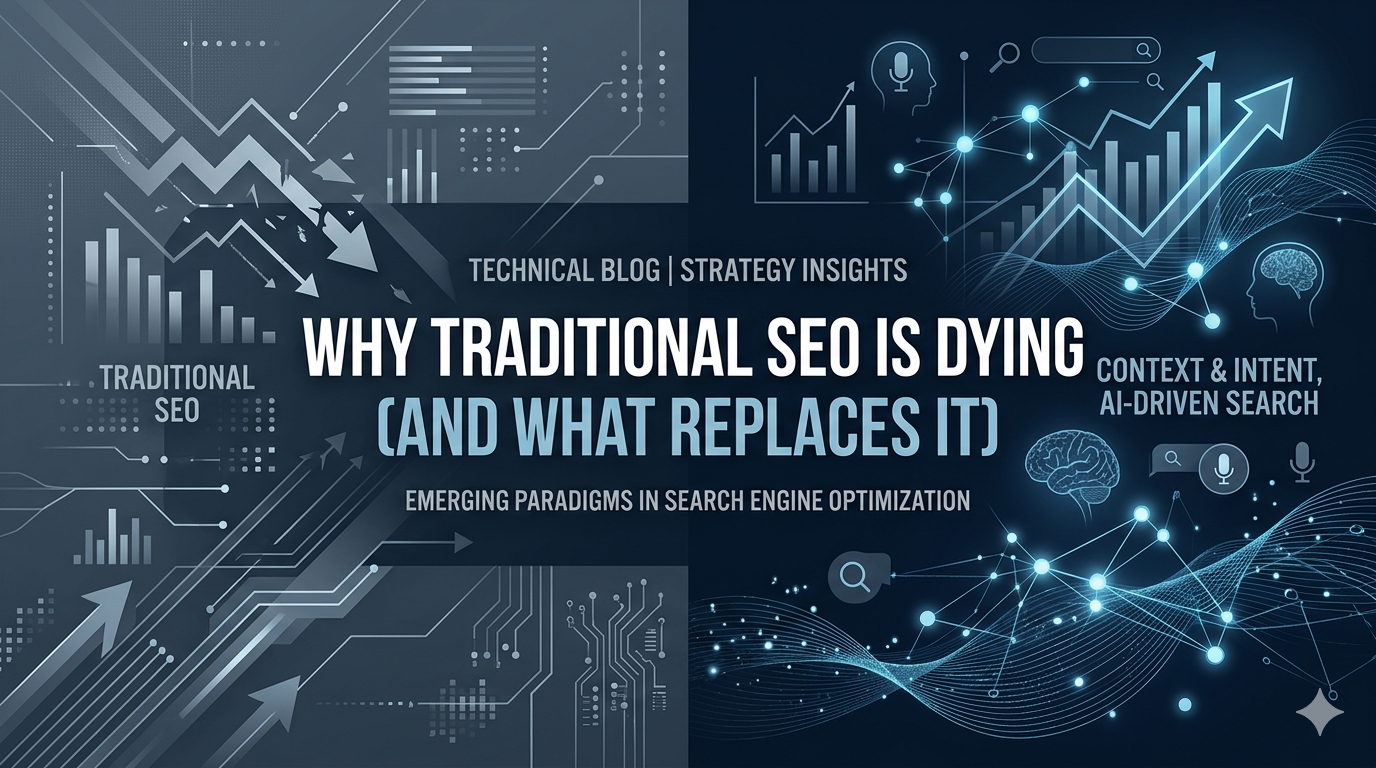
    The SEO sphere is perpetually morphing. Holding tight to old methods invites digital anonymity. The old SEO way, so stuck on keyword density and amassing links, is fading away. This piece looks at why old-school SEO is weakening and shines a light on new methods stepping in. Get ready to see how to shift gears and excel as search engine optimization changes.

    The Flaws of Traditional SEO

    Old-time SEO often spins around bending search engine rules instead of giving real worth to people. One big problem? Leaning too hard on keyword repetition, which means stuffing content with keywords. This once worked, but now search engines such as Google penalize it. They want language that sounds real and feels good to use. Picture a site jamming “best coffee beans” into every line. It will likely drop in the rankings. Focusing on quantity over substance hurts how well things read and fails to grasp what searchers truly want. Knowing the real aim of searches matters.

    Another issue is pushing for backlinks, no matter how good or relevant they are. Old SEO often buys links from poor sites or swaps links. These moves break Google’s rules and bring heavy penalties, maybe even getting delisted. Google’s Penguin update back in 2012 cracked down on these dodgy link schemes. Now, Google wants backlinks from reliable places that fit well. Getting links the right way, through killer content and true connections, is what counts.

    Plus, old SEO forgets how key user experience (UX) is. Sites built only for search engines often have bad design, crawl at a snail’s pace, and are hard to use. These issues can send people away fast and lower involvement, signaling to search engines that the site is not up to par. One Google study revealed that 53% of mobile visitors bail if a site takes more than three seconds to load. A modern SEO take must focus on UX by making sites fast, mobile-ready, and easy to explore.

    The Rise of User-Centric SEO

    The SEO future lies in giving users things that truly help them. User-focused SEO means knowing what users want, giving real value, and making their experience smooth. This lines up with Google’s aim: organizing info for all and making it useful. One part of user-focused SEO? Making great, complete content that answers questions and solves problems. This content should be deep, helpful, and grab attention. Keep users on the page and lure them to other areas of the site. Instead of a quick blog post on “SEO tips,” how about a full guide covering everything from keyword research to link gains.

    Being ready for mobile is just as important. Most folks now browse on phones, so a mobile-suited site is key for SEO success. Google uses mobile-first indexing, which means the phone version of a site is what it checks and lists. If your site doesn’t fit phones, rankings could suffer. Mobile fixes include design that adjusts, speeds that are quick, and easy steps on smaller screens. Google’s PageSpeed Insights can size up site speed and tip ways to get better.

    Technical SEO is super important for user-focused SEO. It tweaks the behind-the-scenes tech parts of a site to boost crawlability, index status, and overall function. This means a clear site plan, using schema to clue in search engines, and fixing errors or broken links. A sharp tech SEO plan can hugely lift a site’s search visibility. Tools like Google Search Console and Bing Webmaster Tools can pinpoint tech snags and offer solutions.

    The Importance of Content Quality and Relevance

    Great, useful content is the base of new SEO. Search engines, like Google, favor content that teaches, connects, and feels trustworthy. This means content not just answering questions, but adding unique thoughts and views. Write well, avoid errors, and nail the grammar. Optimize for easy reading, using clear titles, subtitles, and lists to split up big chunks of text. SEMrush found that long pieces (over 3,000 words) tend to do better in search than shorter ones. This does not mean everything has to be long, but deep and full pieces are valued by search engines and users alike.

    Being relevant matters just as much. Shape content to fit the needs and interests of your audience. Know their search words, pain points, and reasons for searching. Keyword research still helps find topics and words, but pair it with digging into what rivals post and polling users. One good move is making pillar content, big guides covering a wide topic. These pillar pages then link to smaller pieces covering details. This builds a site that makes sense and is easy for users and search engines to explore.

    Visual content also brings a lot. Pictures, videos, and infographics make things more interesting and appeal to viewers. Visuals can make hard ideas easier and break up long text. When using visuals, optimize them for SEO by naming files well and adding alt tags. Alt tags tell search engines what the image is about, which can boost its search visibility. Apps such as Canva and Adobe Spark help make nice visuals without needing design pros.

    Leveraging Data and Analytics for SEO Success

    Data insights and analytics help measure if SEO work is paying off and point to areas to sharpen. Google Analytics gives lots of data on site traffic, user moves, and changes. The data tracks key signs such as organic traffic, how fast people leave, time on a page, and change rates. By checking these signs, see how users act on your site and spot areas for user experience gains. Suppose a page sees people leaving fast. That might mean the content is not right for the search or hard to use.

    Google Search Console shines a light on how Google sees and lists your site. It helps find crawl errors, broken links, and tech issues affecting search visibility. It also shows keywords driving traffic, which fine-tunes keyword plans. Keep an eye on Search Console to fix issues hurting SEO function. If Google skips certain pages, they might be blocked by your robots.txt file or not linked well from other spots.

    A/B testing boosts website elements such as titles, calls to action, and layouts. A/B splits a page into two versions (A and B), showing each randomly to traffic segments. By watching how each performs, learn which works best to meet targets, such as more changes or fewer bounces. Apps such as Optimizely and VWO set up and run A/B tests. Test titles for a blog to see which draws more clicks. Or test button shades to see which leads to more conversions.

    The Role of AI and Machine Learning in SEO

    Artificial intelligence (AI) and machine learning are remaking SEO. Search engines such as Google use AI more to know user intent, tailor search results, and flag spam. SEO pros should grasp how AI ticks and tune their sites for AI search rules. One AI impact is natural language processing (NLP). NLP handles how computers and human talk meet. Google uses NLP to get the meaning of searches and link them to fitting content. Writers should aim for a real, chatty tone that humans and AI can get. Tools such as Grammarly and Hemingway Editor help sharpen content clarity and flow.

    RankBrain, Google’s AI helper, is another change. RankBrain sizes up user moves to see which searches best fit a query. SEO pros should then lift user actions such as click rates (CTR), page time, and leave rates. By making good content that holds users, you tell RankBrain your site is of worth. Catchy titles and images can raise CTR. Detailed, helpful content can grow page time.

    AI automates tasks once done by SEO pros. AI tools now automate keyword digs, content tuning, and link gains. These tools save time and lift speed, letting SEO pros focus on plans and relationships with voices of influence. Tools such as Surfer SEO and MarketMuse use AI to check rival content and tip ways to lift your own. These tools point out content gaps and make sure pieces are full and right.

    The Future of SEO: A Holistic Approach

    The SEO future means a full take that joins tech SEO, content flow, user feels, and data checks. SEO pros need a wide skill set. They must tune sites for search engines, make grabbing content, check data, and know user action. Brand strength is a key for a full SEO plan. Brand strength means people view your brand as a trusted source in your field. Building brand strength can lift search ranks, grow organic traffic, and cause changes. One path to brand strength? Make top-notch content that holds worth for your crowd. This can mean blog posts, articles, videos, podcasts, and social media shares.

    Connecting with influencers also matters in a full SEO plan. Influencers are those with lots of followers on social media or other spots online. By pairing with influencers, reach more people and build brand buzz. Pick influencers that fit your crowd and line up with your brand values. Say if content is sponsored or paid to keep trust with your audience.

    A winning full SEO plan calls for patience. SEO is not a quick fix. It takes time to build brand strength, make killer content, and bond with influencers. Stay patient and watch your work to tweak your plan as needed. By working to give worth to users and craft a strong online voice, lasting SEO gains are yours.

    Conclusion

    Old SEO ways fade more each day. A user-focused path that stresses great content, tech skills, and moves led by data paves the SEO road. Adjust by focusing on how users feel, making content of worth, and using data smarts. The SEO future means a full plan that embraces change and puts real worth for users first. Only then will gains in the shifting digital world last.
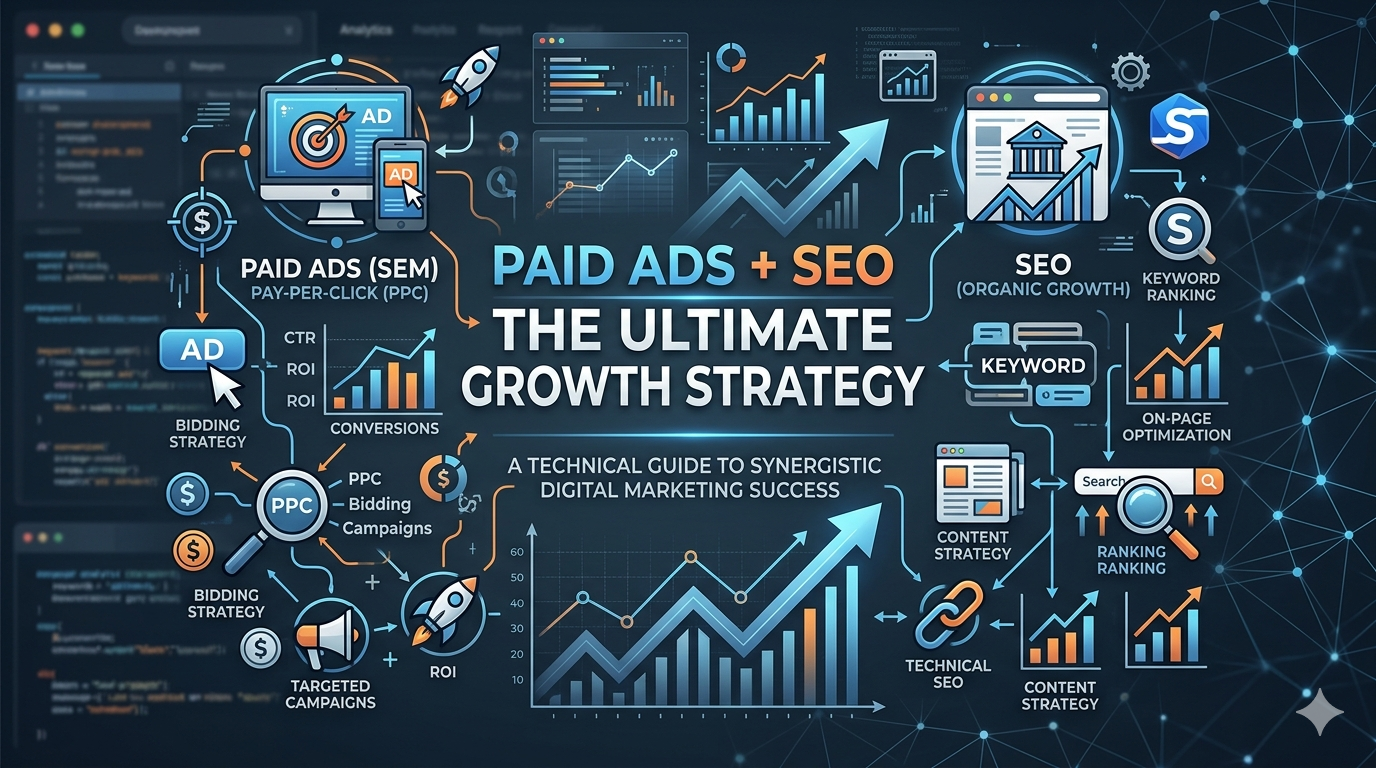
  • Paid Ads + SEO: The Ultimate Growth Strategy

    Paid Ads + SEO: The Ultimate Growth Strategy

    Paid Ads + SEO: The Ultimate Growth Strategy

    Envision a marketing approach where immediate visibility through paid online advertisements nourishes sustained organic expansion. This represents the synergistic effect achieved when blending paid advertising tactics alongside search engine optimization. Paid advertisements generate instant visitor traffic and deliver insightful data, whereas search engine optimization guarantees consistent, unpaid prominence. This collaboration yields a resilient and economical growth strategy.

    This document examines how you might intertwine paid advertisements and search engine optimization to yield the greatest outcome. You will discover how to leverage paid promotional campaigns to recognize valuable search phrases, fine-tune your site for search engines, and devise a far-reaching advertising plan propelling both rapid and sustained gains.

    Why Combine Paid Ads and SEO.

    Depending completely on paid marketing or search engine optimization carries restrictions. Paid advertisements produce rapid outcomes, yet are often pricey and cease providing visitor traffic once you end payments. Search engine optimization is a long-range strategy that could require prolonged periods to create considerable results. Integrating the two enables you to conquer such constraints and formulate a more potent advertising strategy. A multitude of organizations utilize paid advertisements to rapidly boost visitor numbers to their web page while concurrently striving to enhance their unpaid search engine optimization rankings. The aforementioned methodology yields immediate results alongside sustained expansion over time.

    Improved Visibility: Paid advertisements ensure display at the summit of search results, whereas search engine optimization guarantees your web page ranks organically. Such a combined approach amplifies your organization’s footprint and raises the likelihood of drawing in prospective clientele. Research by Google revealed that organizations featured in both paid and unpaid search outcomes register a 27% higher click-through rate compared against individuals showing up in just one.

    Data-Driven Insights: Paid advertisement initiatives offer insightful data regarding keyword success, demographic tendencies, and sales conversion metrics. This data can inform your search engine optimization strategy, aiding you to fine-tune your web page for search phrases and subjects almost guaranteed to generate visitor traffic and sales. You can use A/B testing within your marketing promotions to determine which advertisement language and landing pages are most appealing to your demographic, subsequently implementing this knowledge to your web page content and meta overviews.

    Cost-Effectiveness: While paid advertisements can be costly, they can simultaneously deliver strong results if utilized judiciously. By utilizing paid campaigns to target high-intent search phrases and channel specific visitor traffic to your web page, it is feasible to create leads and sales at a reduced acquisition cost than you could via alternative marketing avenues. Once your search engine optimization initiatives start exhibiting results, you could diminish your reliance on paid advertisements and depend increasingly on unpaid visitor traffic. This mixed methodology enhances your advertising budget and optimizes your return.

    Brand Building: Showing up in both paid and unpaid search outcomes cultivates organization trustworthiness and credibility. Clientele will be more prone to trust an organization that continually appears in search outcomes, regardless if it originates from paid advertisements or unpaid listings. This enhanced trust can translate into higher sales conversion percentages and consumer devotion.

    Step-by-Step Guide to Integrating Paid Ads and SEO

    Incorporating paid advertisements and search engine optimization necessitates a planned methodology. The following is a detailed guide to help you begin:

    Step 1: Keyword Research

    Commence by undertaking detailed search phrase research. Utilize tools such as Google Keyword Planner, SEMrush, and Ahrefs to discover applicable search phrases exhibiting elevated search frequency and minimal competitiveness. Concentrate on search phrases aligning with your organization’s objectives and ideal consumer. Prioritize long-tail search phrases, as they are often less competitive and can channel highly qualified visitor traffic to your web page.

    For instance, in the event you market running footwear, you could target search phrases such as “best running footwear for novices” or “comfortable running footwear for marathon training.” These long-tail search phrases are more exact and suggest a greater degree of intent than broad search phrases such as “running footwear.”

    Actionable Tip: Construct a spreadsheet to arrange your search phrases based upon search frequency, competitiveness, and significance. This will aid you to arrange your initiatives and monitor your development.

    Step 2: Launch Paid Ad Campaigns

    Utilize your search phrase research to formulate focused paid advertisement initiatives on platforms like Google Ads and Bing Ads. Concentrate on channeling visitor traffic to pertinent landing pages on your web page. Employ compelling advertisement text and unambiguous calls to action to stimulate clicks and sales conversions. Closely oversee your initiative’s performance and institute corrections as necessary to optimize your outcomes. Guarantee your landing pages are fine-tuned for sales conversions, showcasing transparent value assertions and intuitive forms.

    Google Ads offers numerous targeting possibilities, encompassing demographic targeting, geographic targeting, and interest-based targeting. Leverage these possibilities to connect with your optimal consumer and optimize your advertisement expenditure. In the event you are targeting millennials, you can utilize demographic targeting to display your advertisements solely to individuals within the 25-34 age bracket.

    Actionable Tip: Utilize A/B testing to experiment using varying advertisement text, landing pages, and targeting configurations. This will aid you to identify what performs optimally for your demographic and optimize your initiatives for maximum returns.

    Step 3: Analyze Paid Ad Data

    Utilize the data originating from your paid advertisement initiatives to notify your search engine optimization strategy. Recognize the search phrases generating maximum visitor traffic and sales conversions, subsequently fine-tuning your web page content and meta overviews for such search phrases. Focus your attention on the search terms triggering your advertisements, as they can deliver insightful perspectives into the manner in which individuals are pursuing your goods or offerings. Identify high-converting search phrases from your paid marketing promotions and incorporate them within your web page content, blog posts, and meta overviews. Monitor search phrase rankings utilizing tools such as SEMrush or Ahrefs to monitor your progression.

    Google Ads furnishes in-depth reports regarding keyword success, encompassing click-through rates, sales conversion rates, and expense per acquisition. Utilize these reports to recognize the most lucrative search phrases and assign your funding correspondingly. Should you find that a specific search phrase is generating a substantial quantity of sales conversions at a low acquisition expense, you might contemplate elevating your bid for such a search phrase.

    Actionable Tip: Employ Google Analytics to monitor the actions of users clicking your paid advertisements. This will assist you to grasp the manner in which they are interacting with your web page and pinpoint areas suitable for enhancement.

    Step 4: Optimize Your Website for SEO

    Fine-tune your web page for search engines by enhancing your web page’s arrangement, content, and technical search engine optimization. Generate superior, informative content pertinent to your ideal demographic and fine-tuned for your target search phrases. Guarantee your web page is mobile-friendly, loads swiftly, and is effortless to navigate. Accumulate superior backlinks originating from reliable web pages to enhance your web page’s authority and ranking capacity. Guarantee your web page is mobile-friendly, as Google employs mobile-first indexing. Enhance page load times by fine-tuning visuals, leveraging browser storing, and minimizing HTTP requests.

    Technical search engine optimization entails fine-tuning your web page’s code and framework to facilitate search engines’ crawling and indexing of your site. This encompasses generating a sitemap, fine-tuning your robots.txt file, and repairing any crawl faults. Utilize Google Search Console to oversee your web page’s performance in search results and pinpoint any technical concerns demanding resolution.

    Actionable Tip: Employ a tool such as Screaming Frog to crawl your web page and pinpoint any technical search engine optimization concerns necessitating repair.

    Step 5: Content Marketing

    Generate valuable and compelling content drawing in and engaging your ideal demographic. Concentrate on generating blog entries, articles, videos, and infographics delivering valuable data and resolving your audience’s challenges. Promote your content via social media, email marketing, and alternative avenues to channel visitor traffic to your web page. Reconfigure content into varying formats to engage a wider audience. Undertake search phrase research to pinpoint subjects your audience is seeking.

    Content marketing is a long-range strategy capable of aiding you to cultivate organization recognition, establish expertise, and channel unpaid visitor traffic to your web page. By continually generating superior content, you can draw in and engage your ideal demographic and cultivate a devoted following.

    Actionable Tip: Formulate an editorial schedule to strategize your content marketing undertakings. This will aid you to remain organized and guarantee you are continually generating valuable content for your audience.

    Step 6: Link Building

    Accumulate superior backlinks originating from reliable web pages to enhance your web page’s authority and ranking capacity. Concentrate on earning backlinks originating from pertinent web pages within your sector. Generate valuable content to which other web pages will aspire to link. Contact bloggers and reporters to promote your content and earn backlinks. Participate in sector forums and groups to cultivate connections and earn backlinks.

    Backlinks are among the most crucial ranking determinants within Google’s algorithm. The greater the quantity of superior backlinks you possess, the higher your web page will rank in search outcomes. Concentrate on earning backlinks originating from web pages exhibiting elevated domain authority and pertinence to your sector.

    Actionable Tip: Employ a tool such as Ahrefs to dissect your rival’s backlink profiles and pinpoint prospective link building avenues.

    Step 7: Monitor and Adjust

    Continuously oversee your web page’s performance and institute corrections to your strategy as needed. Monitor your search phrase rankings, unpaid visitor traffic, and sales conversion percentages. Analyze your paid advertisement initiative’s performance and institute corrections to your bids, targeting, and advertisement text. Remain current regarding the newest search engine optimization patterns and algorithm revisions. Frequently analyze your web page’s performance utilizing Google Analytics and Google Search Console. Monitor search phrase rankings, unpaid visitor traffic, and sales conversion percentages to gauge the effectiveness of your search engine optimization initiatives.

    The digital marketing environment is continually evolving, therefore it’s crucial to remain current regarding the newest patterns and strategies. By continually overseeing your web page’s performance and instituting corrections to your strategy as needed, you can guarantee you are optimizing your outcomes and remaining ahead of the competition.

    Actionable Tip: Configure Google Analytics dashboards to monitor your crucial performance indicators and monitor your development over prolonged durations.

    Tools for Integrated Paid Ads and SEO

    A multitude of tools can assist you to incorporate your paid advertisements and search engine optimization endeavors:

    • Google Ads: Manage and optimize your paid advertisement initiatives.
    • Google Analytics: Monitor web page visitor traffic, user behavior, and sales conversion percentages.
    • Google Search Console: Monitor your web page’s performance in search outcomes and pinpoint technical search engine optimization concerns.
    • SEMrush: Undertake search phrase research, dissect rival strategies, and monitor search phrase rankings.
    • Ahrefs: Dissect backlink profiles, undertake search phrase research, and monitor search phrase rankings.
    • Moz Pro: Undertake search phrase research, dissect web page authority, and monitor search phrase rankings.

    Common Mistakes to Avoid

    Incorporating paid advertisements and search engine optimization can be difficult. The following are a few typical errors to prevent:

    • Ignoring Keyword Research: Neglecting to undertake thorough search phrase research can result in squandered advertisement spending and substandard search engine optimization outcomes.
    • Neglecting Landing Page Optimization: Channeling paid advertisement visitor traffic to poorly optimized landing pages can result in reduced sales conversion percentages.
    • Not Tracking Results: Neglecting to monitor your outcomes can render it challenging to recognize what is performing effectively and what is not.
    • Overlooking Mobile Optimization: Neglecting to fine-tune your web page for mobile devices can result in a substandard user encounter and diminished search rankings.
    • Ignoring Technical SEO: Neglecting technical search engine optimization can render it challenging for search engines to crawl and index your web page.

    Conclusion

    Integrating paid advertisements and search engine optimization furnishes a potent growth strategy. By utilizing paid marketing promotions to amass data and channel initial visitor traffic, subsequently utilizing such data to inform your search engine optimization endeavors, it is feasible to devise a sustained and economical advertising strategy. Remember to undertake thorough search phrase research, fine-tune your web page for search engines, generate valuable content, and accumulate superior backlinks. Utilizing a planned methodology and the appropriate tools, you can attain considerable expansion and enhance your presence online.

    The essential takeaways are:

    1. Integrate paid advertisements and search engine optimization for optimum impact and sustained expansion.
    2. Utilize data originating from paid marketing promotions to optimize your search engine optimization strategy.
    3. Concentrate on generating superior content and accumulating backlinks.

    By accepting this integrated approach, organizations can unlock growth and establish a dominant presence.

  • SEO vs PPC: Which Should You Focus on First?

    SEO vs PPC: Which Should You Focus on First?

    SEO vs PPC: Where Should Your Focus Begin

    For any enterprise aiming to amplify its footprint in the digital realm, the choice between Search Engine Optimization (SEO) and Pay-Per-Click (PPC) advertising represents a pivotal juncture. SEO promises enduring, natural prominence, while PPC delivers immediate, pinpointed traffic. Deciding where to first put resources demands a firm grasp of each approach’s strengths, weaknesses, and potential effects. This guide furnishes a thorough side-by-side to aid in sculpting an informed course for your venture. Grasping the subtle contrasts between SEO and PPC stands as paramount for fruitful digital marketing.

    Understanding SEO: The Long View

    SEO involves refining your web presence to secure elevated rankings on search engine results pages (SERPs) for pertinent keywords. It weaves together tactics including keyword research, on-page adjustments, content forging, link acquisition, and technical enhancements. The aim is to swell natural traffic, stemming from individuals selecting unpaid search outcomes. SEO represents a sustained commitment, demanding unwavering input and patience. Flourishing with SEO frequently transmutes into lasting expansion and brand prestige.

    Key Components of SEO:

    • Keyword Research: Pinpointing the terminology your target demographic employs when hunting for offerings akin to yours. Tools such as Google Keyword Planner, SEMrush, and Ahrefs are useful to uncover relevant keywords boasting ample search volume and modest competition.
    • On-Page Optimization: Fine-tuning facets within your digital property, encompassing title tags, meta descriptions, header tags, and content, to resonate with intended keywords. For instance, embedding “plumbing services” within the title tag and meta description of a page honed for that phrase.
    • Content Creation: Constructing superior, insightful, and captivating material that satisfies user objectives and imparts value. A blog entry elucidating the remedy for a dripping faucet stands to draw users scouting for DIY fixes.
    • Link Building: Procuring inbound links from credible external sites to bolster your own site’s authority and trustworthiness. Securing a link from a premier industry periodical signals to search algorithms that your site warrants confidence.
    • Technical SEO: Confirming your site’s technical soundness, marked by brisk loading speeds, mobile compatibility, and refined site layout. Google favors sites presenting a smooth user voyage.

    The Merits of SEO

    SEO extends multiple noteworthy gains poised to propel long-term enterprise triumph. Central among these rests its cost-efficiency. Though SEO necessitates an upfront outlay of time and resources, natural traffic is essentially without cost, diverging from PPC’s pay-per-click model. SEO cultivates confidence and believability, as users tend to place greater trust in natural search outcomes than in sponsored adverts. Elevated natural rankings cement your brand as a frontrunner within your sector. SEO galvanizes sustained traffic. Once your web space garners favorable rankings for relevant keywords, it stands to persistently lure traffic for months or even years, calling for minimal recurring care. SEO elevates website usability. Refining your site for search engines inherently entails enhancing its user experience, rendering it more intuitive and compelling. SEO anchors digital marketing, dispensing enduring worth.

    The Drawbacks of SEO

    Notwithstanding its plethora of virtues, SEO equally harbors limitations. The most prominent challenge entails the protracted timeframe required to witness tangible effects. SEO constitutes a drawn-out campaign, potentially demanding months or even years to secure substantive rankings and traffic upticks. SEO similarly proves intricate and ever-shifting. Search engine algorithms undergo frequent revisions, necessitating constant vigilance regarding the latest guidelines and the capacity to recalibrate your strategies accordingly. SEO exists as a competitive arena. Numerous entities vie for coveted positions within search results, complicating efforts to distinguish yourself from the pack. SEO mandates sustained commitment. Upholding elevated rankings necessitates continuous oversight, refinement, and content creation. SEO might not furnish instant gratification, yet it paves the way for lasting expansion.

    Understanding PPC: Instant Prominence

    PPC advertising signifies a format of digital promotion wherein you remit a charge each instance an individual engages with your ad. Google Ads reigns as the paramount PPC platform, empowering you to compose and showcase adverts on Google’s search results pages and its web of associated sites. PPC extends instant visibility and precisely targeted traffic. You possess the capacity to engage your intended audience swiftly and proficiently. PPC serves as a precious instrument for generating prompt outcomes. PPC imparts granular governance over your promotional initiatives.

    Key Components of PPC:

    • Keyword Targeting: Designating the keywords for which you desire your adverts to surface when users initiate searches. Leveraging broad match, phrase match, or exact match keywords endows you with command over the scope and pertinence of your ads.
    • Ad Creation: Crafting persuasive ad language engineered to draw clicks and impel conversions. Your adverts ought to accentuate your distinctive selling propositions and integrate a definitive call to action.
    • Bidding: Establishing the uppermost sum you are poised to disburse for each interaction with your ad. You retain the latitude to elect between manual bidding, wherein you prescribe bids autonomously, or automated bidding, wherein Google dynamically calibrates bids anchored to your campaign aims.
    • Landing Page Optimization: Guaranteeing your landing pages mirror your adverts and are honed for conversions. Your landing pages ought to furnish a seamless user voyage and streamline the process for visitors to undertake the aspired action.
    • Tracking and Analytics: Overseeing your campaign efficacy and executing adaptations as warranted to heighten your outcomes. Google Ads dispenses comprehensive intelligence pertaining to your clicks, impressions, conversions, and cost per conversion.

    The Merits of PPC

    PPC bestows various merits rendering it a captivating avenue for numerous enterprises. It yields prompt outcomes, empowering you to galvanize traffic and produce leads expeditiously. PPC assumes a highly focused posture, enabling you to engage specific demographics, proclivities, and locales. PPC furnishes granular command, bestowing upon you the aptitude to modulate your campaigns in real-time to refine performance. PPC furnishes quantifiable outcomes. You possess the capacity to monitor your campaign efficacy and gauge your return on investment (ROI). PPC extends a swift means to vet disparate marketing messaging and landing pages. PPC imparts immediate ingress to prospective clientele.

    The Drawbacks of PPC

    PPC equally presents its share of constraints. It bears the potential to prove exorbitant, notably for fiercely contested keywords. You remit payment for each interaction, irrespective of whether that interaction culminates in a conversion. PPC necessitates continuous oversight. You must scrutinize your campaigns, recalibrate your bids, and fine-tune your adverts to sustain peak performance. PPC can prove intricate. Mastering the complexities of PPC advertising mandates temporal devotion and concerted endeavors. PPC traffic abruptly ceases upon the suspension of payments. Dissimilar to SEO, PPC neglects to cultivate enduring brand prestige or consistent traffic. PPC necessitates a committed financial plan and attentive stewardship.

    SEO vs PPC: A Detailed Side-by-Side

    To forge a judicious determination regarding which strategy to prioritize, it remains vital to juxtapose SEO and PPC across several pivotal dimensions. Ponder the ensuing:

    • Cost: SEO entails preliminary investments in time, content, and potentially skilled assistance. PPC mandates recurring ad expenditure, which remains susceptible to variations contingent upon keyword rivalry and campaign configurations.
    • Time to Results: SEO mandates months to yield noteworthy outcomes, whereas PPC furnishes immediate visibility and traffic.
    • Targeting: SEO singles out users probing specific keywords, while PPC greenlights more finely grained targeting premised upon demographics, predilections, and behaviors.
    • Control: SEO extends circumscribed command over search engine rankings, whereas PPC endows comprehensive command over ad placement and messaging.
    • Sustainability: SEO cultivates durable, consistent traffic, whereas PPC traffic wanes upon the cessation of ad expenditure.
    • Credibility: SEO bears the capacity to elevate brand credibility and confidence, whereas PPC adverts might be perceived as less reliable by select users.
    • Measurement: Both SEO and PPC furnish quantifiable outcomes, yet PPC dispenses more exhaustive data concerning campaign efficacy.

    Where Should Initial Efforts Be Directed.

    The verdict on whether to spotlight SEO or PPC hinges upon your distinct enterprise aspirations, budgetary constraints, and timeframe. A universal solution remains elusive. Nevertheless, the ensuing represents general precepts:

    Focus on PPC First If:

    • Immediate results are paramount, and expeditious traffic generation is desired.
    • Budgetary constraints exist, and the vetting of disparate marketing communications and landing pages is essential.
    • A novel offering is being introduced, and rapid awareness generation is sought.
    • A niche demographic exhibiting particular traits or pursuits is being targeted.

    Focus on SEO First If:

    • Long-term brand cultivation is the goal, coupled with the establishment of sector authority.
    • Budgetary limitations exist, and the generation of sustainable traffic over time is sought.
    • Broad keywords exhibiting substantial search volume are being targeted.
    • Enhancing your website’s collective user voyage is the core pursuit.

    Consider a Combined Approach:

    Frequently, the most efficacious strategy resides in the fusion of SEO and PPC. PPC can be harnessed to catalyze immediate traffic and yield leads while concurrently tending to SEO to cultivate enduring natural visibility. This tack empowers you to amplify your reach and attain both near-term and long-range objectives. Numerous enterprises discern success in the synthesis of their SEO and PPC blueprints. A unified digital marketing design often garners superior outcomes.

    Real-World Illustrations

    Let’s scrutinize how disparate entities have triumphantly manipulated SEO and PPC.

    Illustration 1: E-commerce Outlet – Commencing with PPC

    An e-commerce shop vending handcrafted jewelry initiated a PPC campaign targeting precise product keywords such as “silver earrings” and “gold necklaces.” They registered a prompt surge in web traffic and transactions. Concurrently, they embarked upon an SEO initiative, authoring blog entries concerning jewelry upkeep and styling recommendations. Gradually, their natural traffic expanded, diminishing their reliance on sponsored advertising. This methodology empowered them to generate preliminary revenue and cultivate a steadfast customer foundation.

    Illustration 2: Local Service Enterprise – Prioritizing SEO

    A regional plumbing enterprise zeroed in on SEO by refining their website for localized keywords such as “plumber near me” and “emergency plumbing services.” They likewise crafted content tackling prevalent plumbing predicaments and dispensing helpful pointers. While they ran a modest PPC campaign in parallel, their paramount emphasis rested upon SEO. Within a handful of months, they witnessed a substantial uptick in natural leads and ascended to the role of the preeminent plumber within their vicinity. Their unwavering SEO endeavors yielded protracted dividends and cemented their status as a reputable regional purveyor.

    Illustration 3: SaaS Firm – Uniting SEO and PPC

    A SaaS firm extending project management software leveraged PPC to engage users probing project management tools and associated keywords. They similarly committed to SEO by crafting informative blog entries, case studies, and white papers. Their collaborative methodology empowered them to seize both immediate leads and cultivate protracted natural visibility. They routinely optimized their SEO and PPC campaigns premised upon performance intelligence, amplifying their ROI. Their integrated blueprint culminated in noteworthy expansion and market dominance.

    Gauging Triumphs: Essential Metrics

    To ascertain the productivity of your SEO and PPC initiatives, it stands as imperative to monitor pivotal metrics. The ensuing represents several of the foremost metrics to track:

    • Website Traffic: Monitor the aggregate traffic directed toward your web domain, coupled with the origins of that traffic (natural, sponsored, referral, etc.). Google Analytics constitutes a precious instrument for monitoring web traffic.
    • Keyword Rankings: Oversee your website’s positioning for designated keywords within search engine results pages. Tools such as SEMrush and Ahrefs furnish aid in tracking keyword rankings.
    • Click-Through Rate (CTR): Assess the proportion of users who engage with your adverts or natural search outcomes. An elevated CTR signifies that your adverts and listings resonate and captivate.
    • Conversion Rate: Track the proportion of users who execute the aspired action on your web domain, encompassing the submission of a form, consummation of a transaction, or procurement of a resource.
    • Cost Per Acquisition (CPA): Compute the expenditure associated with procuring a novel customer via your SEO or PPC initiatives. This metric equips you to ascertain the ROI of your marketing undertakings.
    • Return on Ad Spend (ROAS): Gauge the revenue engendered for each monetary unit expended on PPC advertising. ROAS embodies a pivotal gauge of the profitability of your PPC campaigns.

    The Trajectory of SEO and PPC

    The digital marketing terrain remains in perpetual flux, and both SEO and PPC adapt to these transmutations. Several paramount trends to observe encompass:

    • Artificial Intelligence (AI): AI assumes a progressively pivotal role in both SEO and PPC. AI-driven instruments lend assistance in automating assignments, refining campaigns, and personalizing user voyages.
    • Voice Search: As voice search gains traction, it remains imperative to refine your website and content for voice queries. Voice search frequently encompasses lengthier, more conversational keywords.
    • Mobile-First Indexing: Google currently employs the mobile rendition of your website for indexing and ranking. Guaranteeing your website’s mobile compatibility proves indispensable for SEO triumph.
    • Personalization: Users anticipate tailored voyages, and both SEO and PPC can be employed to dispense targeted content and adverts anchored to individual inclinations and behaviors.
    • Attribution Modeling: Comprehending how disparate marketing conduits contribute to conversions assumes escalating significance. Attribution modeling equips you to dispense your marketing budget proficiently.

    In Summary

    Rendering a verdict between SEO and PPC necessitates meticulous deliberation of your enterprise aims, budgetary allocations, and timeline. PPC furnishes immediate visibility and targeted traffic, whereas SEO cultivates enduring natural visibility and brand stature. Frequently, a collaborative methodology emerges as the most fruitful strategy. Recollect to monitor pivotal metrics to gauge the efficacy of your campaigns and calibrate your strategies as warranted. Prioritize SEO for consistent augmentation, PPC for immediate repercussion, and integrate both for peak outcomes. Comprehending the subtleties of SEO and PPC empowers you to forge strategic judgments, propelling expansion and amplifying your marketing investment.

  • The Future of Search: From Google to AI Assistants

    The Future of Search: From Google to AI Assistants

    The Future of Search: From Google to AI Assistants

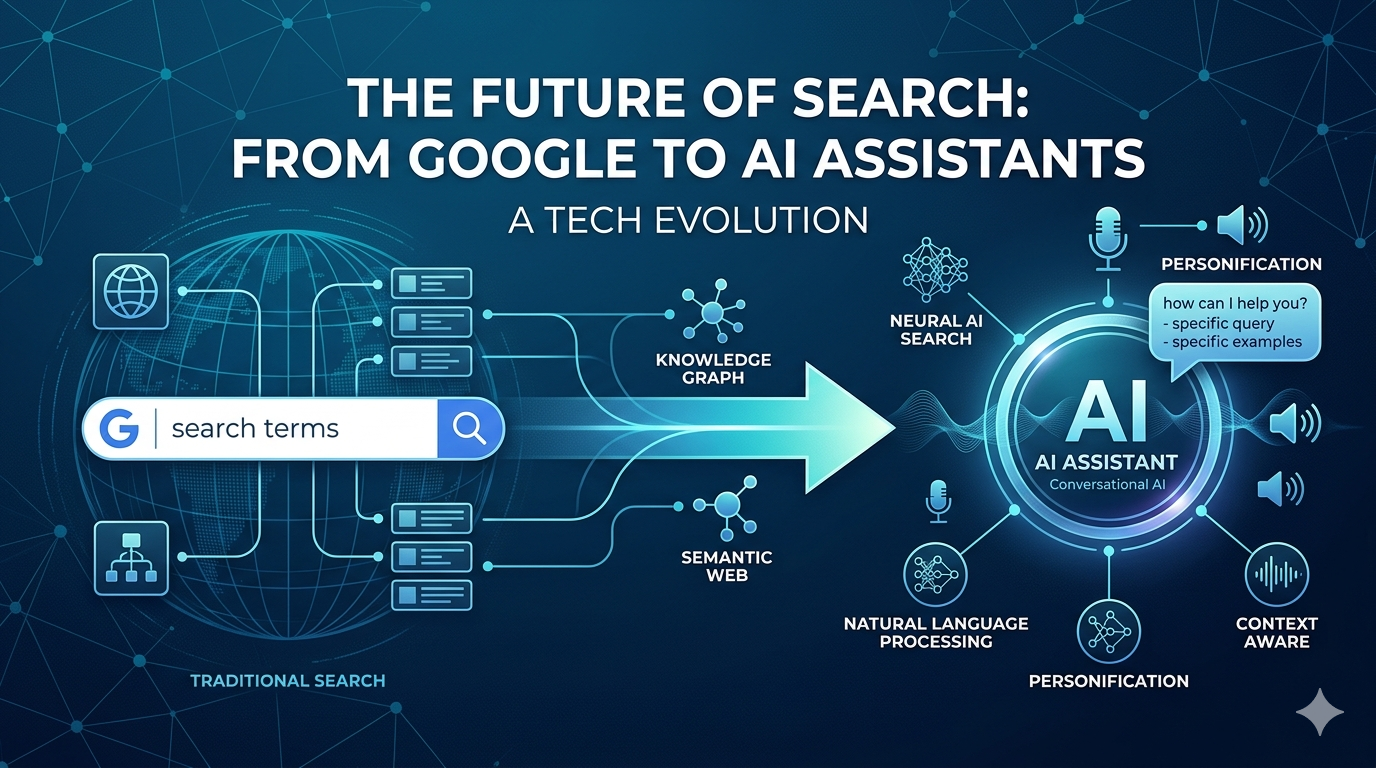
    The quest for knowledge is being reshaped, moving away from conventional search engines like Google and toward savvy AI assistants. A more individualized, streamlined, and intuitive quest is on the horizon. A new period is starting. AI predicts what we need. Answers arrive even before the question is fully formed.

    This piece explores what lies ahead for search, focusing on the expansion of AI assistants, what they can achieve, and how they could threaten Google’s spot at the top. For both businesses and people, it’s vital to grasp these shifts so they can adjust and harness AI’s abilities for information access.

    The Evolution of Search: From Keywords to Context

    The search process has changed a lot. Long gone are the days of basic keyword matching. Early search engines depended on figuring out which sites had certain words that users typed in. Often, these old systems turned up stuff that wasn’t quite right, pushing people to go through a lot of links to find the details they wanted.

    Google shook up the search world with PageRank. The algorithm looked at how websites linked to each other to judge their worth and how well they matched what people were looking for. This step made search results way better. Google became the go-to search engine.

    But, search is moving beyond just keywords and link analysis. AI helpers use natural language understanding and machine learning to understand what users mean and what they’re really asking. Because of this, they can give answers that are more on point. Instead of a bunch of links, they might just provide direct answers or quick summaries.

    Think about this: Instead of typing “weather in London,” an AI assistant gets that you want to know what it’s like outside right now and can reply with something like, “It’s 15 degrees Celsius and cloudy in London right now.” It’s a big change, going from just looking at the words you type to figuring out what you really want to know.

    The Rise of AI Assistants: A New Paradigm in Information Retrieval

    AI helpers, such as Siri, Alexa, and Google Assistant, are showing up more and more in our everyday routines. These helpers can handle questions, set up alerts, play music, and manage gadgets in homes, all through spoken directions or typed messages. Their knack for understanding how we naturally speak and giving personalized replies is changing how we get information.

    A big plus with AI helpers is that they pick up things from how we use them. They look at what we’ve searched for before, what we like, and how we act, which lets them guess what we might need and suggest things that are more relevant. This way of doing things is a huge step away from the same old approach that regular search engines use for everyone.

    What’s more, AI assistants aren’t just tied to what’s on the web. They can pull information from different spots, like calendars, contact lists, and where you are, to give you details that fit the situation. An AI assistant could remind you about a meeting, show you how to get there, and even point out some good spots to grab lunch.

    AI assistants are popping up in all sorts of spots, like smartphones, smart speakers, and vehicles, which is speeding up how many people are using them. These helpers could become super important in our lives as AI gets better and better, totally changing how we hunt for and use information.

    How AI Assistants are Challenging Google’s Dominance

    Google has been the main player in search for a while, but AI assistants are giving them a run for their money. Google does have its own AI assistant, called Google Assistant, but now there are many others competing, with big tech companies such as Apple, Amazon, and Microsoft all fighting for a piece of the pie.

    AI assistants can give straight answers and summaries. No need to click through lots of links and read tons of stuff to find what you need. It is way more convenient. Folks who just want fast, clear info will find this extremely appealing.

    AI assistants make searching personal. They learn what users like and want, and they can give better advice and figure out what users need before they even ask. That’s a big difference from normal search engines that give the same results to everyone.

    Google is still strong in the search game. It has a massive collection of web pages. It also has great search systems and a well-known name. It’s also putting lots of money into AI and machine learning. This will help Google make its search tools even better and create new AI features. The future of search might be a mix of both. Search engines and AI assistants will likely both have important jobs.

    The Impact of AI on Search Engine Optimization (SEO)

    AI assistants are seriously shaking up search engine optimization (SEO). The usual SEO moves, like focusing on keywords to boost websites, don’t work so well anymore. AI assistants now put context and user intent first.

    To do well with AI-powered search, businesses should make content that’s great, tells people what they want to know, and answers their questions directly. Content should be clear, short, and well set up. It must be easy for people and AI to get.

    It’s also key to set things up for voice search. More and more people are using voice search since AI helpers are becoming so common. To make the most of voice search, use language that sounds natural. Answer common questions like you’re having a conversation.

    Ensure websites work well on phones and load quickly. AI assistants often favor sites that give a good experience on phones. When businesses keep up with these shifts, they can get noticed more in AI-powered search results and reach more people.

    The Ethical Considerations of AI-Powered Search

    Using AI more for search raises some moral questions. One worry is that AI systems could be unfair. If AI systems are taught using skewed information, they might make existing inequalities in society even worse. AI systems must be fair to stop discrimination in search results.

    Search results could be messed with. AI systems could be twisted to push certain sites or thoughts, which could sway what people think. Ways to stop the meddling of AI systems must be created. This would ensure search results are fair.

    Making search personal can put privacy at risk. AI assistants gather lots of info about what users like and do. This info could be used to watch people or for bad stuff. User privacy must be protected. Personal info has to be used responsibly.

    Tackling these moral questions is key to ensuring AI-powered search helps everyone. By pushing fairness, transparency, and responsibility, AI’s strength can be used to make search better for all.

    The Future of Search: Personalization, Prediction, and Proactivity

    Search will likely become more personal. AI helpers will get even better at knowing what we need and guessing what we’ll ask. They’ll give suggestions that are more personal and offer info that fits what we like and do.

    Search could work with augmented reality (AR) and virtual reality (VR). Imagine pointing a smartphone at a building and seeing info about its past and who’s there now. It would be like exploring a virtual museum and playing with exhibits in a real way.

    AI could make learning experiences personal. AI helpers could look at how we learn best and what we’re not so good at. Then, they could make learning plans that fit us. These plans could change as we get better and give us feedback, making learning more fun.

    There are many possibilities for the future of search. As AI gets better, we’ll see even more creative uses come up. By welcoming these shifts and getting used to the new search scene, we can use AI to get info, learn things, and connect with the world.

    Conclusion

    Moving from standard search engines to AI helpers is changing how we find info. AI helpers provide experiences that are personal and efficient. They learn from what users do and then give relevant suggestions. Businesses must change their SEO plans to prioritize great content and voice search. AI’s power must be used. The future of search is now, and it’s intelligent.

  • How to Reduce Cost Per Click (CPC)

    How to Reduce Cost Per Click (CPC)

    How to Reduce Cost Per Click (CPC)

    Imagine slashing your ad spend by 50% while maintaining the same traffic flow. That’s the potential of effective Cost Per Click (CPC) reduction. It isn’t solely about saving funds; it’s about amplifying your return and expanding your campaigns smartly. This article delivers strategies to cut your CPC and boost your ad game.

    Understanding Cost Per Click (CPC)

    Cost Per Click (CPC): the sum you expend each instance a person interacts with your ad. It’s a pivotal metric in the realm of digital ads, impacting your budget and potential earnings. A steep CPC can rapidly exhaust funds, restricting your reach and conversion likelihood. Conversely, a modest CPC lets you garner extra interactions for the same investment, amplifying your audience and improving your odds. Several elements sway CPC: keyword competitiveness, ad finesse, audience options, and bidding blueprints. Grasping these elements? The initial stride toward actively directing and lessening your CPC. Savvy direction is key for ad victories.

    Keyword Research and Selection for Lower CPC

    Thoughtful research forms the bedrock of any worthwhile plan to lessen CPC. Correct keywords can drastically lower CPC and boost ad relevance. Extended phrases often have reduced rivalry and greater transformation percentages. Instead of aiming for “shoes,” attempt “shoes for training on concrete.” These searches point to elevated purpose and often bring reduced costs. Employ tools like Google Keyword Planner, SEMrush, or Ahrefs to pinpoint pertinent, less-cutthroat phrases. Scrutinize search volume, contest, and suggested bid values for each phrase to inform choices. Update your keyword roster to scrub poor performers and insert fresh chances. Continual refining ensures you’re pursuing budget-friendly phrases. Real keyword work can reshape your CPC.

    Improving Quality Score to Minimize CPC

    Quality Score is a metric Google employs to judge the link and caliber of ads and pages. It influences your rank and CPC. An elevated score can trigger reduced costs and improved ad placements. Several elements boost Quality Score: predicted interaction rate, ad link, and landing page feeling. To elevate your score, confirm that phrases, ads, and pages are tightly knit. Pen engaging ad language that mirrors the content of your page. Refine your page for link, feeling, and mobile ease. A swift, user-friendly page can boost your score. Monitor your score in Google and spot areas to boost. Touching on these areas can cause considerable drops in your costs. A good Quality Score is an asset.

    Ad Copy Optimization for Enhanced Click-Through Rate (CTR)

    Ad language is key for drawing interactions and boosting your CTR, which, in turn, can lessen your CPC. Your ad should be plain, short, and aligned with your audience. Spotlight the perks of your offering and insert a firm push. Employ persuasive language and tackle the explicit needs of your probable patrons. A/B test ad variants to pinpoint the soundest messaging and creative components. Try headlines, descriptions, and calls to action to glimpse what resonates with your audience. Employ ad extensions to supply details and heighten ad visibility. Sitelink extensions, callout extensions, and structured snippet extensions can enhance ad language and boost CTR. Revisit and update ad language to keep it current. Outdated language can trigger reduced CTRs and steeper costs. Optimizing your ad language for better CTR is key.

    Landing Page Optimization for Conversions and Relevance

    Your page is where guests opt to transform, making it a key component of your strategy. A page should link to your ad language and supply an easy feeling. Verify that your page loads swiftly, is mobile-ready, and simple to use. Employ plain headlines, engaging visuals, and a firm push. Refine your page for conversions by lessening distractions and simplifying it for guests to finish the intended action, like filling a form or purchasing. A/B test page variants to pinpoint the soundest design and content components. Try layouts, headlines, images, and pushes to glimpse what drives top transformation percentages. Employ heatmaps and analytics tools to monitor visitor behavior on your page and spot areas to boost. Revisit and update your page to keep it fresh. A quality page can drastically lessen your CPC. Page optimization is essential.

    Targeting Options and Audience Refinement

    Precise direction is key for hitting the correct audience and lessening wasted investment. Google delivers various direction options, counting audience direction, interest direction, and return visits. Employ audience direction to hit users based on age, gender, locale, and other audience elements. Employ interest direction to hit users based on interests and online behavior. Employ return visits to re-engage users who have interacted with your site or ads. Refine your direction based on data. Spot the segments prone to transform and pour efforts into those segments. Exclude unrelated audiences to duck wasting investment on users unlikely to be curious about your offering. Revisit and update your direction to ensure you’re hitting the right folk. Savvy direction is key in lessening ad costs.

    Bidding Strategies and Optimization Techniques

    Picking the correct bidding plan is key for reigning in your CPC and amplifying your ROI. Google delivers bidding plans, counting manual CPC bidding, automated bidding, and target CPA bidding. Manual CPC bidding lets you set your peak CPC for each phrase. Automated bidding employs machine learning to auto-adjust bids based on goals. Target CPA bidding lets you set a target cost per action (CPA), and Google will auto-adjust bids to hit that target. Try bidding plans to glimpse what suits your strategy. Monitor strategy outcome and adjust bids. Employ bid adjustments to boost or lessen bids based on locale, time, and other elements. Revisit and refine your plan to ensure you’re maximizing your investment. Selecting bidding blueprints is key to lessening costs.

    Geo-Targeting for Localized Campaigns

    For firms aiming for explicit geographic zones, geo-direction can be a tool for lessening CPC. By centering ads on locales where your patrons are apt to be, you can boost ad link and lessen your CPC. Google lets you aim ads by country, zone, city, or a radius around your firm. Employ geo-direction to hit patrons in your locale or in zones where your offering is wanted. Exclude locales to duck wasting investment on users outside your zone. Employ locale extensions to supply details about your firm, like address and hours. This can boost ad link and draw local patrons. Revisit and update geo-direction to ensure you’re hitting the right spots. Sound geo-direction can reshape CPC.

    Device Targeting and Mobile Optimization

    Given rising mobile usage, device direction and mobile refinement are key for lessening CPC. By aiming ads at devices, like phones, tablets, or machines, you can boost ad link and lessen your CPC. Google lets you tweak bids based on device. Boost bids for devices prone to transform and lessen bids for devices unlikely to transform. Verify that your site is mobile-ready. A swift, easy mobile site can boost transformation percentages. Employ mobile ad formats, like click-to-call ads and app install ads, to hit mobile users soundly. Revisit and update device direction to ensure you’re hitting the right devices. Device direction is a fine strategy for lessening costs.

    Ad Scheduling for Peak Performance Times

    Ad plans let you reign in when ads are shown, which can be a tool for lessening CPC. By planning ads to run during peak times, you can boost ad link and lessen your CPC. Scrutinize data to pinpoint days and times when your audience is apt to be online. Plan ads to run then and pause them during off times. Employ ad plans to seize events. You could plan ads to run during a sale or a weekend event. Revisit and update ad plans to ensure you’re maximizing ROI. Strategic planning helps lessen costs.

    A/B Testing and Continuous Improvement

    A/B testing is pitting two versions of an ad to glimpse which does better. It’s a tool for refining strategies and lessening CPC. Test ad variants, layouts, headlines, and calls to action to glimpse what resonates with your audience. Employ A/B testing tools like Google Optimize to run tests and track outcomes. Scrutinize test data to pinpoint wins and implement changes. Continuously test and refine strategies to stay ahead and lessen CPC. Routine A/B tests are key for ad success.

    Regular Monitoring and Analysis of Campaign Performance

    Routine monitoring is key for spotting areas for gains and lessening CPC. Track metrics, like views, interactions, CTR, transformation rate, and cost per transformation, to glimpse how strategies are doing. Employ Google Analytics to track visitor behavior on your site and spot areas to boost the user feel. Revisit phrases, ads, and page outcomes to spot weak spots. Adjust strategies based on analysis to boost results and lessen CPC. Sound monitoring is key.

    Leveraging Negative Keywords to Refine Targeting

    Negative phrases stop ads from showing for unrelated searches, saving investment and boosting ad link. Spotting and adding negative phrases is key for refining strategies and lessening CPC. Revisit your search term reports to spot searches that are triggering ads. Add those searches as negative phrases to stop ads from showing for those searches down the road. Employ negative phrase rosters to apply negative phrases to campaigns at once. Revisit and update negative phrase rosters to ensure you’re hitting the right audience. Negative phrases greatly help lessen costs.

    Utilizing Remarketing Lists for Search Ads (RLSA)

    Return Visit Rosters for Search Ads (RLSA) let you aim users who have interacted with your site. By aiming these users, you can boost ad link and lessen your CPC. Fashion return visit rosters based on user behavior, like users who have viewed pages on your site or users who have added items to their cart. Aim return visit rosters with explicit ads and bids to hit these users soundly. Employ RLSA to offer discounts to users who have shown interest in your offering. Revisit and update return visit rosters to ensure you’re hitting the right audience. Utilizing RLSA is a method of lessening costs.

    Competitor Analysis for Strategic Bidding

    Grasping rival plans can supply insights for refining strategies and lessening CPC. Scrutinize rival phrases, ad language, and pages to spot chances for gains. Employ rival analysis tools like SEMrush to track rival outcomes and spot strengths. Adjust bidding based on rival behavior. If rivals are bidding aggressively on a phrase, you might need to boost bids to stay heated. Or, focus on phrases to lessen CPC. Monitor rival moves to stay ahead and refine strategies. Rival analysis is key for lessening costs.

    Brand Awareness and Organic Search Optimization

    Building brand view and refining your site for search can help lessen CPC. By boosting brand visibility, you can draw natural traffic to your site, lessening reliance on paid ads. Refine your site for phrases and boost search ranks. Fashion info that draws your audience. Promote that info to boost its reach. Build backlinks from sites to boost your site’s weight. By building a strong online presence, you can lessen reliance on paid ads and lower costs.

    Conclusion

    Lessening your Cost Per Click (CPC) calls for a strategy that covers keyword research, Quality Score gains, ad language gains, page gains, bidding blueprints, and routine monitoring. By enforcing these strategies, firms can lower ad costs, boost ROI, and expand strategies smartly. Note that lessening costs isn’t a job but a process that calls for care. Embrace A/B testing, stay briefed on practices, and prioritize supplying value to your audience. Consistent work will pave the path for wins in digital ads.

  • Retargeting Strategies That Actually Work

    Retargeting Strategies That Actually Work

    Retargeting Strategies That Actually Work

    Many companies find it hard to turn first-time website visitors into paying clients. Retargeting? It can be the answer. It reignites the interest of people who’ve already looked at what you offer. But retargeting that works isn’t just about showing the same ads over and over. It needs a smart plan. It’s about making things personal and grabbing attention. This piece? It’s full of retargeting moves meant to bump up your sales and seriously grow your income. Mastering retargeting? It’s key to selling more stuff.

    Understanding the Fundamentals of Retargeting

    Retargeting, also called remarketing, means showing ads to people who’ve been on your site or used your app before. Maybe they checked out a specific page. Maybe they put something in their cart but didn’t buy it. The main idea behind retargeting? To remind them what you’ve got and get them to come back and buy. Old-school retargeting often misses the mark. Why? It’s not personal enough. It’s not relevant enough. Great retargeting? It’s about hitting the mark with the right message, to the right person, at just the right moment.

    One big plus of retargeting? It doesn’t drain your wallet. You’re talking to people who’ve already shown they’re interested. So, your sales rates are usually better than with regular ads. Research says that website visitors who get retargeted are way more likely to buy, maybe as much as 70% more likely. That extra sales rate? It means your ad money goes further. Retargeting? Think of it as a must-have piece of your whole marketing game.

    Segmenting Your Audience for Personalized Retargeting

    Ads that don’t speak to anyone in particular? They often fail. They don’t get to the heart of what people want. Splitting up your audience? It lets you craft ad experiences that feel personal. They speak directly to different groups of visitors. For example, group people by the pages they visited. Or the items they looked at. Or what they did on your site. Then? Hit each group with ads that match what they did and what they care about. Nailing your audience groups? It makes retargeting way more effective.

    Here are some ways to slice and dice your audience:

    • Website Page Visits: Show ads featuring products to people who checked out those product pages.
    • Shopping Cart Abandonment: Offer free shipping or a discount to those who left stuff in their cart.
    • Past Purchasers: Tempt past buyers with ads for new stuff or special deals.
    • Engagement Level: Sort people by how long they hung out on your site. Or how many pages they clicked through.

    By using these grouping methods, you can launch retargeting campaigns that truly connect. Campaigns that offer ad experiences that matter. Great grouping? It’s the name of the game in today’s retargeting world.

    Dynamic Retargeting: Showcasing Relevant Products

    Dynamic retargeting? It kicks personalization up a notch. It shows ads that feature the exact items someone looked at on your site. No need to make ads for every single product. Saving you time and headaches. Dynamic retargeting? It’s pure gold for online stores with tons of products. The system remembers what grabbed their attention. Then? It throws those items right back at them. Many are cheering over dynamic retargeting.

    Want to make dynamic retargeting happen? You’ll need a product feed. It holds all the details about your products. Pictures, descriptions, prices. Hook that feed up to your retargeting setup. Watch it spin out ads based on what people were browsing. Platforms like Facebook and Google Ads? They’re packed with dynamic retargeting power. Dynamic retargeting is thriving.

    See a pair of shoes on a website? Boom. Ads for those exact shoes follow you around as you surf other sites or scroll through social media. That personalized touch? It seriously boosts the chances of a sale. Dynamic retargeting? It’s a top-tier tactic in the retargeting arsenal. The perks are undeniable.

    Leveraging Email Retargeting for Direct Engagement

    Email retargeting? It means sending targeted emails to those who poked around your site but didn’t pull the trigger. It’s an awesome way to pull potential clients back into the fold. Email retargeting lets you drop personalized messages right into their inbox. It’s a more personal, more engaging move than just throwing up display ads. It’s invaluable.

    Here are some email retargeting plays:

    • Abandoned Cart Emails: Ping those who ditched items in their cart. Remind them of what’s waiting. Sweeten the deal with free shipping or a discount.
    • Browse Abandonment Emails: Target those who checked out specific items but didn’t add anything to their cart. Suggest stuff that’s similar or goes well together.
    • Welcome Series Emails: Cook up a string of automated emails for new sign-ups. Show off your brand. Highlight your hottest items.

    Want to squeeze every drop of goodness out of your email retargeting? Personalize your messages. Toss in the user’s name, what they looked at, and what they tend to buy. Include calls to action that are hard to ignore. Get them clicking back to your site. Get them buying. It seals the deal.

    Combining Retargeting with Search Engine Optimization (SEO)

    Retargeting snags people who’ve already been on your site. SEO? It pulls in fresh faces through search results. Marry retargeting with SEO. Unleash a beast that drags both new and returning traffic to your doorstep. SEO and retargeting? A match made in marketing heaven.

    Here’s how to weave retargeting into your SEO tapestry:

    • Target Users Who Searched for Specific Keywords: Show ads to those who hunted for keywords tied to your products, even if they didn’t initially click through to your site.
    • Promote High-Performing Content: Retarget folks who browsed your blog or resource pages with ads pushing your products.
    • Optimize Landing Pages for Retargeting: Make sure your landing pages are primed for sales. Make it brain-dead simple for retargeted visitors to finish their purchase.

    Line up your retargeting and SEO strategies. Forge a marketing machine that reels in new clients and keeps the old ones coming back for more. It’s powerful.

    Frequency Capping: Preventing Ad Fatigue

    Bombarding someone with the same retargeting ad over and over? You risk ad fatigue. They get annoyed. They tune you out. Frequency capping? It lets you set a limit on how many times someone sees your ad. Stop ad fatigue in its tracks. Boost the overall impact of your campaigns. Don’t bug potential customers.

    Most retargeting platforms offer frequency capping options. Set the max number of views per user per day, week, or month. Mess around with different caps. Nail that sweet spot between reminding people you exist and driving them nuts. Frequency capping is good.

    Cap it at, say, three views per user per day. Each user sees your ad no more than three times a day. No matter how many sites or social media platforms they visit. It is essential.

    Measuring and Optimizing Your Retargeting Campaigns

    Want to know if your retargeting is paying off? Track key numbers. Fine-tune your strategy. Keep tabs on how your campaigns are doing. Tweak as needed to pump up your return.

    Watch these metrics like a hawk:

    • Click-Through Rate (CTR): The percentage of users who click your ad.
    • Conversion Rate: The percentage of users who buy something or do what you want them to do after clicking your ad.
    • Cost Per Acquisition (CPA): How much it costs to snag a new customer through your retargeting.
    • Return on Ad Spend (ROAS): The income you rake in for every dollar you drop on retargeting.

    By poring over these metrics, you can spot areas to improve. Boost your ROI. Success hinges on measurement.

    Advanced Retargeting Techniques: Lookalike Audiences

    Lookalike audiences? A slick retargeting trick. You target fresh faces who share traits and behaviors with your current clients. Grow your reach. Snag new customers who are likely to dig what you’re selling. It uses data from your existing customers.

    To conjure a lookalike audience, upload a client list to your retargeting platform. The platform dissects the data. It identifies what your clients have in common. Demographics, interests, online habits. Then? It leverages that info to unearth new users who are cut from the same cloth. It expands your reach.

    Say your current clients are mostly women aged 25-35. They’re into fashion and beauty. The lookalike audience? It hunts down new users who fit that mold. Lookalike audiences are pure gold for businesses aiming to blow up their customer base. Use them.

    Retargeting on Social Media Platforms

    Social media havens like Facebook, Instagram, and Twitter? They’re armed with retargeting weapons. They let you hit users with personalized ads. Ads based on their browsing history and interests. Social media retargeting can be a game-changer. Roping potential clients back to your site. Boost engagement.

    Here are some social media retargeting moves:

    • Website Custom Audiences: Target those who’ve visited your site with ads on social media.
    • Engagement Custom Audiences: Zero in on those who’ve messed with your social media content. Liked, commented, shared.
    • Lead Ad Retargeting: Target those who’ve filled out a lead form on social media with ads peddling your wares.

    Want to supercharge your social media retargeting campaigns? Use visuals that pop. Craft ad copy that hooks your target audience. These platforms give excellent opportunities.

    Conclusion

    Retargeting that clicks? It’s about dropping the right message in front of the right eyeballs at the perfect moment. Group your audience. Personalize your ads. Unleash advanced tactics like dynamic retargeting and lookalike audiences. Forge campaigns that skyrocket your income. Marry retargeting with SEO, email marketing, and social media. Crank up the volume on your results. Keep tabs on your numbers. Fine-tune your campaigns. Dodge ad fatigue. It’s a marathon, not a sprint. Keep experimenting. Keep sharpening your strategies. Strive for marketing nirvana. You’re bound to strike gold.

  • How to Create High-Converting Ads

    How to Create High-Converting Ads

    How to Create High-Converting Ads

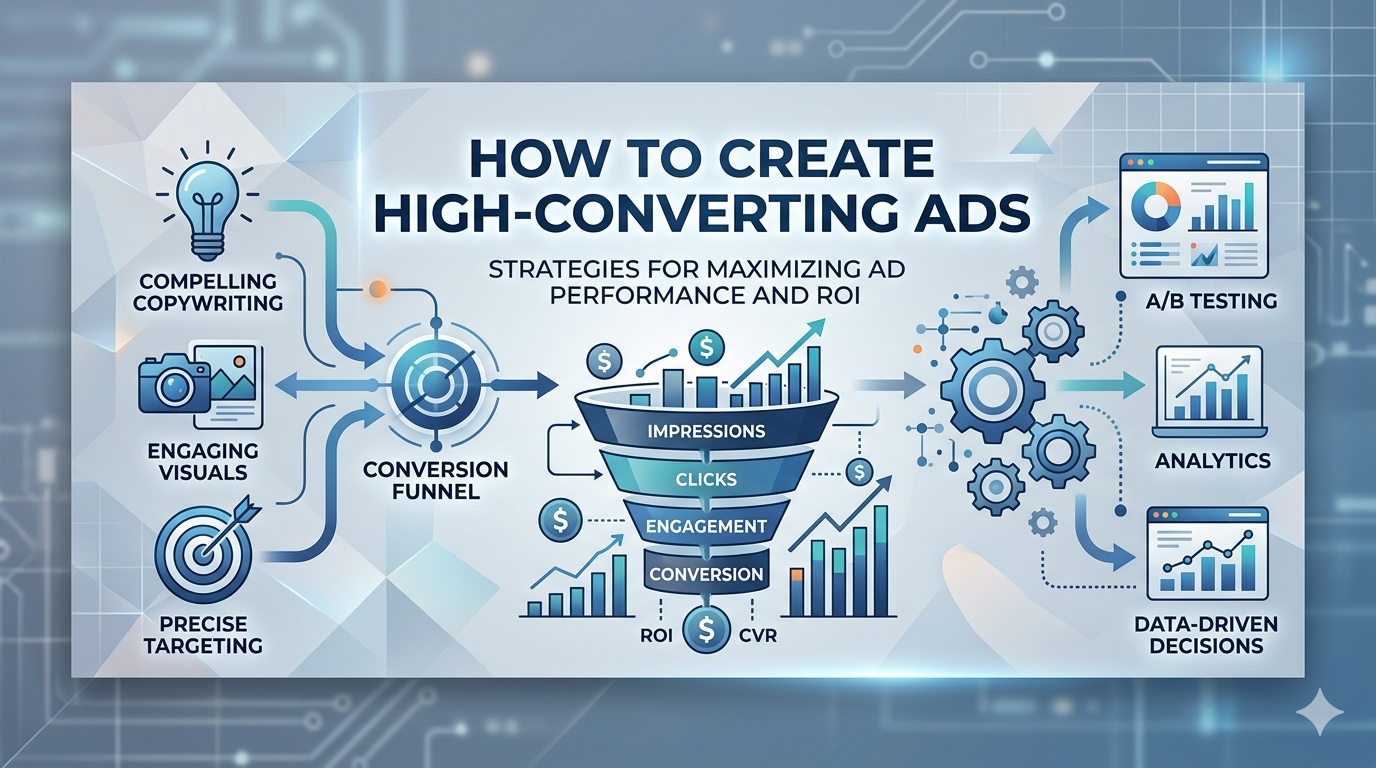
    The difference between an ad that fizzles and one that explodes with success often boils down to strategy and, critically, execution. Ads that truly deliver aren’t accidents. They’re crafted. They’re products of deliberate planning, pinpoint targeting, and relentless refinement. This article offers a practical guide to constructing ads that not only seize attention but also fuel genuine interest. And, of course, elevate your profits.

    Understanding Your Audience: The Foundation of High-Converting Ads

    Before even a single word is written, before a single image is chosen, you must possess an intimate knowledge of your target demographic. This understanding permeates every aspect of your campaign, influencing everything from word choice to platform selection. Begin by developing detailed buyer profiles. These profiles should encompass demographic data (age, gender, location, income), psychographic details (values, interests, lifestyle), and behavioral patterns (online habits, purchase history, frustrations). For instance, envision selling project oversight software to small business owners. Your ideal customer might be “Evelyn, the Entrepreneur,” who is digitally fluent, mindful of spending, and highly values efficiency. Comprehending Evelyn’s distinct requirements and obstacles enables you to customize your ad’s message for maximum impact.

    Thorough examination of the market is vital in grasping your audience. Employ surveys, focus groups, and vigilant social listening to amass information regarding their preferences, needs, and struggles. Scrutinize your current customer data to discern patterns and trends. Tools such as Google Analytics, Facebook Audience Insights, and Qualtrics furnish invaluable perspectives into your audience’s actions and demographics. As an example, assessment of Google Analytics data might expose that a substantial portion of your website interactions originate from handheld devices, underscoring the necessity for ad designs optimized for mobile viewing. Keep in mind: your audience isn’t a single entity. Segment them according to shared traits to fashion more focused and potent advertising campaigns.

    Crafting Compelling Ad Copy: Words That Sell

    Your advertisement’s writing presents the initial—and occasionally sole—opportunity to grab your intended viewer’s attention. It must be precise, succinct, and gripping. Initiate with a powerful heading that instantly captivates the reader and emphasizes the primary benefit of your offering. Implement action-oriented verbs and influential words to instill a sense of urgency and enthusiasm. Consider this alternative: instead of stating, “Our software aids you in overseeing tasks,” try “Initiate effortless project management with our groundbreaking software!” The body should expand upon the heading, elaborating on the advantages of your proposition. Concentrate on alleviating your audience’s challenges and addressing their concerns. Incorporate endorsements and societal validation to foster confidence and trustworthiness. Provide a quote from a contented client or cite the quantity of individuals who have reaped benefits from your product.

    Each advertisement should feature an obvious and concise call to action. Explicitly instruct your audience on the subsequent action you wish them to undertake. Utilize forceful verbs such as “Buy Immediately,” “Discover More,” “Register Now,” or “Commence Today.” Ensure your call to action is conspicuous and readily discoverable. Use a brightly tinted button or emboldened text. Tailor your ad writing to suit varied platforms. An approach effective on Facebook might prove inadequate on LinkedIn. Modify your message to correspond with the distinct viewer and framework of each platform. On LinkedIn, you might emphasize the career-related perks of your merchandise, while on Instagram, its aesthetic allure may be more compelling. Run tests using varied iterations of your ad writing to ascertain which resonates most effectively with your audience. Experiment with alternative headings, text, and calls to action. Use data to inform your choices and continuously enhance your ad’s performance. Resources such as Google Optimize and Optimizely can facilitate these evaluations and monitor your outcomes.

    Designing Eye-Catching Visuals: Images and Videos That Convert

    Visuals form a critical component of successful advertisements. They secure attention, convey details swiftly, and forge a connection with your intended audience. Employ superior images and videos germane to your offering. Shun generic or artificial-looking stock photos. Instead, elect for authentic images that underscore your brand’s ethos and principles. Selling outdoor equipment. Showcase individuals enjoying your offerings in real-world scenarios.

    Optimize your visuals for varied platforms and display devices. Guarantee that your images and videos are appropriately sized and formatted for each platform. Implement precise text overlays to underscore salient benefits and calls to action. Present a concise video clip with textual overlays exhibiting the primary attributes of your product. Reflect on using animated visuals to secure attention and narrate a story. Animated GIFs and short videos can prove especially compelling on social media. Experiment with varied visuals to ascertain which resonates most successfully with your audience. Use data to inform your choices and constantly refine your ad’s effectiveness. Platforms such as Canva and Adobe Creative Cloud Express aid in creating visuals that appear professional.

    Strategic Platform Selection: Reaching the Right Audience

    Selecting appropriate advertising platforms is crucial for connecting with your desired audience and maximizing your return on investment. Consider the demographics, inclinations, and online actions of your audience when selecting platforms. Targeting young adults? TikTok and Snapchat could prove suitable. Targeting professionals? LinkedIn might represent a superior alternative. Research the various advertising avenues available on each platform. Each one provides multiple ad layouts, targeting possibilities, and pricing arrangements. Comprehend the assets and shortcomings of each platform before investing. Google Ads stands as a robust platform for reaching those actively seeking your offerings. Facebook Ads proves more effective for reaching individuals based on their inclinations and demographic details.

    Allocate your advertising funds prudently across various platforms. Diversify your advertising spending to connect with a broader audience and diminish risk. Monitor your outcomes on each platform to ascertain efficacy. Use data to guide your choices and redistribute your funds accordingly. Discover that Facebook Ads generates a superior return on investment compared to Google Ads? Think about augmenting your budget for Facebook Ads. Mull over employing a multi-channel advertising approach. Integrate varied advertising platforms to compose a cohesive and unified marketing drive. Drive interactions to your website with Google Ads, then employ Facebook Ads to re-engage those who did not convert. High-performing ads hinge on appropriate platform selection.

    Precise Targeting: Reaching the Most Qualified Prospects

    Targeting empowers you to engage with the most qualified prospects through your ads, thereby amplifying your likelihood of conversion. Implement demographic targeting to connect with individuals based on age, gender, location, earnings, and education. Employ interest-based targeting to engage those whose interests, pastimes, and pursuits align with your offering. Implement behavioral targeting to reach individuals based on their actions online, purchasing background, and website visits. Reach those who have visited your website, included items in their digital carts, or engaged with your content. Employ tailored audiences to target your existing clientele and potential leads. Upload your customer directory to fashion a tailored audience on Facebook Ads or Google Ads. Target your most valuable clients with specialized advertisements. High-performing ads rely on appropriate audience selection.

    Employ similar audiences to connect with potential clients akin to your current base. Such audiences are fashioned by scrutinizing the traits of your current clients and pinpointing novel individuals who exhibit those characteristics. Expand your scope and pinpoint fresh, suitable prospects. Continuously refine your targeting grounded in your outcomes. Track your ad’s efficacy and discern which targeting avenues yield superior outcomes. Modify your targeting appropriately to augment your return on investment. Discover that a specific demographic doesn’t respond favorably to your ads? Consider excluding them from your targeting. High-performing ads hinge on appropriate audience refinement.

    A/B Testing and Optimization: Continuous Improvement for Higher Conversions

    A/B testing involves contrasting two iterations of an ad to ascertain which performs optimally. It constitutes a vital method for refining your advertisements and bolstering your conversion percentages. Assess varied components of your advertisements, such as headings, text, visuals, and calls to action. Modify only a single element at a given moment to precisely gauge the impact of each alteration. Put to the test two distinct headings to ascertain which generates heightened click-through rates. Employ a sample size deemed statistically significant to assure the precision of your outcomes. The larger the sample, the greater the confidence in your findings. Resources such as Google Optimize and Optimizely are conducive to executing evaluations and monitoring your outcomes. High-performing ads hinge on appropriate testing.

    Monitor your ad’s performance metrics to pinpoint areas needing improvement. Track your click-through rate, conversion percentage, expense per click, and return on ad expenditure. Employ these metrics to discern which advertisements are performing admirably and which are not. Make determinations grounded in data to refine your advertisements. Shun relying on instinct or intuition. Employ data to inform your choices and constantly enhance your ad’s efficacy. Your click-through rate registers as low? Try evaluating alternative headings or visuals. Continuously refine your advertisements grounded in your outcomes. Advertising represents an iterative procedure. You should consistently be evaluating and refining your advertisements to bolster your conversion percentages. High-performing ads hinge on continuous enhancement.

    Landing Page Optimization: Completing the Conversion Journey

    Your landing page constitutes the destination for your ad-generated interactions. Visitors will gain further insight into your product or offerings and, crucially, opt to convert. Ensure your landing page correlates with your ad’s writing and images. The message conveyed on your landing page should mirror the message within your advertisement. This generates a seamless and unified encounter for visitors. Employ a precise and succinct heading that reinforces the primary advantage of your product. The heading should instantly capture attention and inform visitors of the information they can anticipate finding on the page. High-performing ads steer interactions toward streamlined landing pages.

    Incorporate a compelling call to action on your landing page. Instruct visitors on the precise action you desire them to execute. Employ forceful verbs such as “Buy Immediately,” “Discover More,” “Register Now,” or “Commence Today.” Make your call to action conspicuous and readily discoverable. Streamline your landing page for handheld devices. A substantial portion of your website interactions likely stem from handheld devices. Guarantee your landing page adapts and presents effectively across all devices. Assess varied components of your landing page to ascertain what resonates most successfully with your audience. Experiment with alternative headings, text, visuals, and calls to action. Employ data to inform your choices and constantly enhance the performance of your landing page. High-performing ads necessitate enhanced landing pages.

    Tracking and Analytics: Measuring Your Success

    Monitoring and analytics prove vital for gauging the efficacy of your advertising drives. Employ tracking pixels to monitor conversions on your website. Tracking pixels comprise snippets of code positioned on your website to monitor specific actions, such as acquisitions, registrations, or form submissions. Employ Google Analytics to monitor your website interactions and user actions. Google Analytics yields valuable perspectives into how individuals are interacting with your website, encompassing their origin, pages visited, and duration spent on each page. High-performing ads yield quantifiable outcomes.

    Employ UTM parameters to monitor the origin of your interactions. These are tags affixed to your ad URLs to monitor which advertisements steer interactions to your website. Ascertain which advertisements perform admirably and which do not. Consistently scrutinize your analytics data to pinpoint areas meriting enhancement. Seek trends and patterns within your data to discern avenues for streamlining your advertising drives. A specific advertisement generates an elevated conversion percentage? Think about augmenting your funds for that advertisement. High-performing ads hinge on appropriate monitoring and assessment.

    Conclusion

    Devising high-performing advertisements necessitates a strategic approach propelled by data. Comprehending your audience, composing compelling ad writing and visuals, selecting the appropriate platforms, precise targeting, A/B evaluations, and enhancing your landing pages represent crucial stages. Through consistent monitoring of your outcomes and determinations grounded in data, you can devise advertising drives that generate substantial yields and attain your advertising goals. The pathway to triumphant advertising resides in comprehension, adaptation, and refinement. Embrace these tenets and witness your ad’s efficacy surge.

  • How to Steal Traffic from Competitors Ethically

    How to Steal Traffic from Competitors Ethically

    How to Steal Traffic from Competitors Ethically

    The digital marketing landscape is a battleground for attention. Securing website traffic can feel like a zero-sum proposition. It doesn’t need to. Ethical traffic acquisition, sometimes referred to playfully as “smart stealing”, hinges on strategic acumen, not underhanded tactics. Discover proven methods to ethically attract traffic, amplifying your site’s reach and engaging a broader audience.

    Mastering SEO, content strategy, and audience connection drives traffic and builds lasting advantage. The focus should be on delivering exceptional value, optimizing for relevant searches, and building a stronger online persona than rivals. The result: ethical traffic growth.

    Understanding the Competitive Landscape

    Before initiating any traffic strategy, conduct a deep dive into competitor activity. Pinpoint the key players. Those consistently ranking for your keywords and reaching your target demographic. Sophisticated tools shed light on rivals. Consider SEMrush, Ahrefs, and Moz. They reveal keyword performance, backlink strategies, and content approaches. Examining rivals’ strengths and weaknesses highlights paths to ethical acquisition.

    Scrutinize their top-performing material. Uncover areas for superior content creation. If a competitor’s piece on “keyword strategy” ranks well, but lacks depth, produce a more thorough, actionable resource. Explore their backlinks. Find chances for link-building. Sites linking to them might link to you, boosting traffic fairly.

    Keyword Research: Identifying Untapped Opportunities

    Keyword research? Absolutely fundamental to SEO success. Don’t just chase the same popular terms as everyone else. Seek out long-tail keywords. Explore niche areas overlooked by others. Tools like Google Keyword Planner, AnswerThePublic, and KeywordTool.io will unearth relevant, low-competition search terms.

    Craft content that answers specific questions. Address the precise needs of your ideal customer. Don’t just target “content strategy”. Instead, go for “content strategy for early-stage startups.” Targeting long-tail keywords draws highly engaged traffic. It also elevates your rank in search engine results. Fair play.

    Content Marketing: Creating Superior Resources

    Exceptional content anchors any ethical traffic surge. The goal? Produce content that’s more insightful, captivating, and practically useful than what competitors offer. Go beyond repeating the usual. Present novel viewpoints, unique research, and actionable advice that readers can immediately implement. Incorporate varied formats. Think blog posts, infographics, videos, interactive tools. Appeal to diverse learning styles.

    Say a rival has a blog post covering “SEO fundamentals.” Create a detailed guide. Cover the subject exhaustively. Add real-world examples. Provide step-by-step instructions. Offer downloadable templates, checklists, or cheat sheets. More value equals increased engagement. Consistently delivering superior content establishes you as an authority in your niche. It attracts a loyal following. It’s ethical.

    SEO Optimization: Maximizing Visibility

    Search engine optimization is key. You must attract organic traffic. Perform a complete SEO audit. Find and resolve any technical issues hindering site performance. Refine your site’s structure. Improve navigation and internal links. Boost crawlability and user experience. Ensure mobile-friendliness. Make sure your site loads fast on every device.

    Prioritize on-page SEO elements. Perfect title tags, meta descriptions, header tags, and image alt text. Employ relevant keywords naturally in your content. Boost search engine visibility. Attract high-quality backlinks from reputable sites. Elevate your domain authority. A comprehensive SEO approach boosts search ranking. It generates a steady flow of organic traffic. It’s proper.

    Link Building: Earning Authority and Trust

    Backlinks are a huge ranking signal. Google uses them. High-quality backlinks from credible sites tell search engines you’re valuable and trustworthy. Focus on ethical link-building. Use sustainable methods. Guest blogging, content promotion, and relationship development are crucial.

    Identify industry websites accepting guest submissions. Offer relevant, compelling topics. Craft standout content offering unique insights. Give their audience solutions. Share your content on social media. Engage with potential linkers. Cultivate relationships with influencers and journalists. Increase your chances of publication mentions. Consistent, high-quality backlinks elevate your domain authority. You attract organic traffic. All above board.

    Social Media Marketing: Engaging Your Audience

    Social media is powerful. It drives traffic. It engages your target audience. Identify the platforms where your audience spends their time. Focus on those channels. Develop compelling content. Make it resonate. Encourage sharing within networks. Use social media advertising. Reach a broader audience. Steer targeted traffic.

    Connect with your audience. Respond to comments, answer queries, and join conversations. Host contests and giveaways. Create excitement. Draw in new followers. Use social media analytics. Track performance. Pinpoint areas to improve. A comprehensive social media strategy drives site traffic. It builds brand awareness. It fosters a loyal community. And it’s ethical.

    Audience Engagement: Building a Loyal Community

    Building community is essential for lasting success. Engage your audience. Respond to comments. Answer questions. Give valuable insights. Cultivate a sense of belonging. Launch forums, groups, or online events. Let your audience connect. Encourage user-generated content. Ask them to share experiences, opinions, and feedback.

    Reward loyal followers. Offer exclusive content. Provide discounts. Give early access to new products or services. Strong communities create loyal followers. They consistently engage with your content. They share. They drive traffic. It’s all organic.

    Analyzing and Adapting: Continuous Improvement

    Traffic acquisition never stops. Constant analysis and adaptation are essential. Track website traffic. Monitor keyword rankings. Measure conversion rates. Gauge strategy effectiveness. Tools like Google Analytics, Google Search Console, and SEMrush help you monitor performance. They highlight areas for enhancement.

    Try various strategies. See what resonates with your audience. Adapt to your industry. Keep up with the latest trends. Stay up-to-date on SEO, content marketing, and social media. Be ready to adjust. Stay ahead. Continual analysis and adaptation maximize your acquisition. It maintains ethical standards.

    Using Competitive Keywords Ethically

    Using keywords your competitors target is a core part of ethical traffic acquisition. Ethical use means optimizing your content. Provide better answers. Deliver a superior user experience for those searches. Avoid keyword stuffing or cloaking. Those violate search engine guidelines.

    Analyze search results for your keywords. What content is ranking high? What questions are answered? Use this data. Create content that’s more detailed, more current, and more engaging. For example, a blog post compiling expert opinions often beats a simple list. Quality and relevance let you ethically capture traffic from searches your competitors are also targeting.

    Leveraging Competitor Backlinks (Ethically)

    Examining competitors’ backlinks reveals valuable avenues for ethical acquisition. Identify linking sites. Determine why they link. Are they resource pages? Industry directories? News articles? Understanding this context helps you develop your link-earning strategy.

    Create link-worthy content. Contact the sites linking to competitors. Tell them about your content. Explain its value to their audience. Offer a guest post or a testimonial in exchange for a link. Ethical backlink building creates value. It builds relationships. It ensures long-term, ethical acquisition.

    Monitoring Brand Mentions (and Converting Them)

    Tracking brand mentions? Often overlooked. But it’s key to ethical acquisition. Use tools like Google Alerts, Mention, or Brand24. Track mentions of your brand, competitors’ brands, and relevant keywords. When your brand is mentioned, engage. Thank the author. If the mention is positive, share it on social media. If it’s negative, respond quickly and professionally. For competitor mentions, if your solution is a good fit, politely highlight your offerings. This proactive approach turns interest into traffic. It maintains ethical standards.

    When competitors are mentioned, examine the context. Is the author praising them? Expressing frustration? If frustrated, reach out. Offer a solution. Explain how your product addresses their needs. Offer a better experience. Proactive engagement captures traffic ethically. It builds brand awareness. It ensures ethical acquisition.

    The Power of Original Data and Research

    Original data and research? Very effective. They attract traffic. They establish you as a thought leader. Conduct surveys. Analyze data. Run experiments. Generate unique insights unavailable elsewhere. Publish your results in blog posts, white papers, or infographics. Share them on social media. Offer data to journalists and bloggers in exchange for mentions and backlinks.

    Original research draws traffic. It boosts credibility and authority. When others cite your research, they endorse your expertise. They drive more traffic. Investing in original data creates lasting competitive advantage. It attracts a loyal audience. It supports ethical acquisition.

    Ethical Traffic Acquisition: A Summary

    Ethical traffic acquisition isn’t trickery. It’s not manipulation. It provides greater value. It outmaneuvers rivals through superior strategies. Key takeaways: 1) Conduct competitive analysis. Identify opportunities. 2) Create exceptional, original content. Surpass the competition. 3) Implement a complete SEO strategy. Maximize visibility. 4) Build a strong brand. Engage your audience. Foster loyalty. Apply these principles consistently. Ethically capture traffic. Build a lasting online presence. Drive ethical acquisition.

    Ethical traffic acquisition is a never-ending journey. Continuous adaptation and innovation are required. Embrace the challenge. Focus on value. Reap the rewards: increased traffic, higher rankings, and a stronger brand. Ethical acquisition? It’s the key to enduring online success.

  • Content Gap Analysis: Find What You’re Missing

    Content Gap Analysis: Find What You’re Missing

    Content Gap Analysis: Find What You’re Missing

    Businesses often dedicate significant resources to content marketing. Yet, a pivotal element frequently gets sidelined: content gap analysis. This analysis highlights the differences between your existing content and what your audience truly requires. Overlooking such discrepancies means forfeiting opportunities. Opportunities to draw in prospective clients, boost search engine placement, and solidify your brand’s position as an authority.

    This article serves as a thorough guide. A guide to navigating content gap analysis. Discover methods for pinpointing content voids, ranking their significance, and formulating a content plan. A plan tailored to fulfill audience demands and improve your SEO. Expertise in content gap analysis guarantees your content strategy is in sync with user intentions. It also propels quantifiable success.

    Understanding Content Gap Analysis

    Content gap analysis stands as a calculated procedure. One that pinpoints where your existing content falls short. It identifies areas in meeting the desires and anticipations of your intended audience. This includes a comparative look at your current content against competitor offerings. It also involves scrutinizing search engine results pages (SERPs) for pertinent keywords. The intention? To uncover subjects, keywords, and content delivery methods that are either underserved or absent from your content collection. Complete content gap analysis is crucial to improve your content strategy.

    A skillfully executed content gap analysis aids comprehension:

    • Missing Keywords: Which keywords give your rivals ranking advantages that you don’t possess.
    • Unaddressed Topics: What inquiries or struggles does your audience explore that your content overlooks.
    • Suboptimal Content Formats: Are you mainly producing blog articles when your audience favors video guides or interactive tools.

    By spotting and addressing these voids, you are able to generate content that’s more pertinent, captivating, and worthwhile. Content that draws a broader audience. Content that elevates your visibility in search engine results. The process encourages laser-focused content creation.

    Why is Content Gap Analysis Important.

    Content gap analysis brings a wealth of advantages. It empowers content creation. Content that’s more focused, impactful, and attuned to your audience’s requirements. Here are core reasons highlighting the importance of content gap analysis:

    • Improved SEO Performance: By aiming at overlooked keywords and subjects, search engine rankings rise. Increased organic traffic to your site results. Content gap analysis directly correlates with SEO gains.
    • Increased Audience Engagement: Content crafted to tackle specific audience queries and challenges yields elevated engagement. Longer durations on pages and heightened social sharing result. Tailored content, derived from content gap analysis, cultivates interaction.
    • Enhanced Brand Authority: Steady provision of valuable and enlightening content positions your brand as a frontrunner in your sector. The reputation lift from content gap analysis improves brand image.
    • Competitive Advantage: Spotting and plugging content voids lets you stand apart from rivals. Securing a greater market portion is achievable. The benefit gained from content gap analysis assists in surpassing the competition.
    • Better Content ROI: By directing your content initiatives toward areas displaying the highest need and opportunity, returns are maximized. Sure content investment is guaranteed with content gap analysis.

    Organizations consistently perform content gap analyses to refine their content plans and maintain a competitive advantage. A content gap analysis helps these organizations spot rising patterns and unfulfilled demands in their industries.

    How to Perform a Content Gap Analysis: A Step-by-Step Guide

    Undertaking a content gap analysis involves a methodical strategy. Take these actions to spot and handle the gaps in your content strategy:

    Step 1: Define Your Target Audience

    Before spotting content voids, you must thoroughly understand your intended audience. Develop comprehensive buyer profiles. These profiles must detail their demographic information, passions, challenges, and online conduct. Employ resources such as analytics platforms, social media statistics, and client surveys to compile audience information.

    Consider small business owners as your intended demographic. Research their prevalent hurdles, such as overseeing cash flow, gaining new clientele, or improving operational efficiency. A grasp of these challenges assists you in pinpointing pertinent content themes. Pinpointing your audience forms the initial phase in content gap analysis.

    Step 2: Identify Relevant Keywords

    Keyword research proves essential. It is essential for pinpointing the words and expressions your intended audience employs when exploring information via the internet. Employ keyword research platforms to uncover pertinent keywords displaying substantial search volume and minimal competition. Concentrate on extensive keywords that are focused. Those that tackle specific queries or requirements. The keyword identification shapes the content gap analysis.

    Rather than targeting “marketing,” concentrate on detailed keywords. Examples include “crafting a marketing strategy for a small business” or “superior marketing tactics for e-commerce ventures.” Extensive keywords frequently unveil explicit content voids that you could resolve. Keyword research is essential to content gap analysis.

    Step 3: Analyze Your Existing Content

    Undertake a thorough inventory of your present content. This encompasses blog entries, posts, videos, infographics, and social media updates. Gauge the success of each content piece employing metrics. These include page hits, time spent on pages, bounce rates, and social shares. Spot the themes and keywords presently yielding results. Spot areas where your content lags. Existing content analysis serves as a cornerstone of content gap analysis.

    Suppose blog entries regarding social media marketing regularly get substantial interaction. But, articles regarding email marketing underperform. This may point to a content void within email marketing. Content success data directs content gap analysis.

    Step 4: Research Competitor Content

    Scrutinize content from your leading rivals to spot themes, keywords, and content formats they employ. They use these to draw in and involve your intended audience. Employ resources to view which keywords your rivals are ranking for. Examine their most-read content pieces. Take note of voids in their content. These could present openings for you. Competitor content analysis bolsters content gap analysis.

    Envision that a rival maintains an extensive guide to content marketing. It generates considerable traffic and social shares. This could signal a necessity for you to generate a parallel resource. One that is even more extensive. The rival’s successes and errors shape content gap analysis.

    Step 5: Conduct a Content Audit

    A content audit entails a methodical examination of all your current content. This is to assess its quality, relevance, and impact. Determine if your content is current, precise, and consistent with your brand’s message. Spot any outdated or inappropriate content needing updates, rewriting, or removal. The content audit adds to content gap analysis.

    Employ a spreadsheet to monitor essential data for each content piece. Examples include its title, URL, intended keyword, date of release, word count, and success metrics. This aids in spotting patterns and trends. These trends can shape your content gap analysis. Detailed content audits ease content gap analysis.

    Step 6: Analyze Search Engine Results Pages (SERPs)

    Scrutinize search engine results pages (SERPs) for your intended keywords. This is to view which content kinds are ranking highly. Take note of the content layout (e.g., blog entries, videos, lists, guides). Note the angle or viewpoint of the content. Note the extent of detail provided. This offers insights into what Google views as the most pertinent and worthwhile content for those keywords. SERP analysis proves valuable to content gap analysis.

    Consider exploring “superior project management software”. If results display primarily list-based posts contrasting software options, create a parallel list-based post. This could prove an effective means to capture traffic for that keyword. SERP traits sway content gap analysis.

    Step 7: Identify Content Gaps

    Based on research, pinpoint the specific content voids present in your content strategy. These voids could include:

    • Keyword Gaps: Keywords granting your rivals ranking advantages, but not you.
    • Topic Gaps: Subjects intriguing your intended audience, yet unaddressed by your content.
    • Format Gaps: Content formats favored by your audience, yet you aren’t generating them.
    • Depth Gaps: Areas where your content lacks substance or detail.
    • Freshness Gaps: Subjects that are outdated or irrelevant.

    Rank these voids by their possible effect on business aims. Concentrate on voids most pertinent to your intended audience. Prioritize those with the highest potential to fuel traffic, leads, and transactions. Spotting content voids forms the heart of content gap analysis.

    Step 8: Develop a Content Plan

    Form a content plan outlining how to resolve the spotted content voids. This plan must include:

    • Specific Content Ideas: Thorough descriptions of the content to be produced. This includes the intended keyword, subject, and format.
    • Publication Schedule: A timeline for releasing your content. This includes deadlines and milestones.
    • Promotion Strategy: A strategy for showcasing your content across social media, email campaigns, and other channels.
    • Resource Allocation: A budget for content production. This includes writer, designer, and tool expenses.

    Guarantee your content plan aligns with overarching marketing aims. It should offer a transparent roadmap for crafting content meeting audience needs. Content should also fuel results. A well-defined content plan acts according to content gap analysis.

    Tools for Content Gap Analysis

    Numerous resources can streamline the content gap analysis process. These tools offer insightful data shaping your content strategy:

    • SEMrush: A thorough SEO resource letting you explore keywords, scrutinize rival content, and monitor search engine rankings. SEMrush stands as a solid tool for content gap analysis.
    • Ahrefs: Another favored SEO resource mirroring SEMrush traits. This includes keyword exploration, backlink checks, and content gap analysis. Ahrefs facilitates content gap analysis.
    • Google Keyword Planner: A complimentary Google resource aiding in keyword exploration and search volume estimation. Google Keyword Planner aids content gap analysis.
    • BuzzSumo: A content resource letting you spot trending subjects, assess rival content, and discover industry influencers. BuzzSumo assists in content analysis for content gap analysis.
    • Google Analytics: A web analytics resource providing data regarding website traffic, user conduct, and content success. Google Analytics informs content gap analysis.

    These resources, paired with a methodical strategy, can uncover worthwhile content chances. They can also help generate a content strategy fueling results. The listed tools bolster effective content gap analysis.

    Examples of Content Gap Analysis in Action

    Consider real-world examples of employing content gap analysis to refine content strategy:

    • Example 1: E-commerce Company: An e-commerce company selling fitness gear performed a content gap analysis. They learned rivals were ranking for keywords tied to “home exercise schedules” and “beginner fitness pointers.” They primarily focused on product-specific content. They generated a string of blog entries and videos showcasing complimentary workout schedules and fitness pointers. This drew a fresh audience of likely patrons. Content gap analysis helped the e-commerce company broaden its reach.
    • Example 2: SaaS Company: A SaaS company offering project management software performed a content gap analysis. They found their audience was seeking details regarding “agile project management” and “remote team collaboration.” Their content primarily highlighted software traits. They generated a series of articles and webinars tackling these subjects. This increased website visits and produced more leads. Content gap analysis helped the SaaS company address user needs.
    • Example 3: Healthcare Provider: A healthcare provider performed a content gap analysis. They learned their audience was exploring details regarding “mental health resources” and “stress management techniques.” Their content primarily highlighted physical health. They generated a string of blog entries and infographics showcasing pointers for handling stress and accessing mental health resources. This enhanced their brand image and drew new patients. Content gap analysis helped the healthcare provider broaden its scope.

    These illustrations depict employing content gap analysis to spot and resolve unmet demands within your intended audience. It results in enhanced SEO success, greater audience interaction, and enhanced brand authority. Real-world illustrations display content gap analysis gains.

    Conclusion

    Content gap analysis stands as a crucial step for any organization aiming to maximize its content marketing initiatives. Through methodical spotting and resolution of voids within your content strategy, you can generate more pertinent, captivating, and worthwhile content. Content that draws a wider audience and fuels superior results. Regular undertaking of content gap analyses guarantees your content strategy stays potent. It also aligns with business aims. Content gap analysis forms an ongoing step adapting to shifting demands. Frequent performance of content gap analysis provides a chance to hone your content strategy based on rising trends and user conduct.

    Remember these essential points:

    • Pinpoint your intended audience and grasp their requirements.
    • Undertake thorough keyword exploration to spot pertinent search terms.
    • Scrutinize your present content and spot areas needing enhancement.
    • Explore your rivals’ content and spot chances to distinguish yourself.
    • Form a content plan resolving the spotted content voids.

    Through acting on these steps, you can generate a content strategy delivering real worth to your audience. It can also fuel measurable results for your organization. Content gap analysis strengthens effective content strategies.

  • How to Reverse Engineer Competitor Content Strategy

    How to Reverse Engineer Competitor Content Strategy

    How to Reverse Engineer Competitor Content Strategy

    Competitors don’t just battle for market share. A search engine ranking war also rages. Unlocking a rival’s content approach reveals insights. Valuable insights. This article? A comprehensive guide. It’s about dissecting competitor content. Identifying opportunities. Adapting proven moves. Outperforming them.

    Step 1: Identify Your Key Competitors

    Pinpoint the true contenders. It’s more than a list of similar companies. Identify businesses that consistently outrank you. Target keywords matter. Tools? SEMrush, Ahrefs, Moz. They identify rivals. Keyword overlap, domain authority. If you target “best project management software”, analyze the top 10. Identify consistently appearing domains. Those are your content foes.

    Step 2: Comprehensive Content Audit

    Conduct a content audit. Scrutinize their blogs. Resource libraries. Case studies. White papers. Social media too. Topics? Formats? Blog posts, videos, infographics? Frequency matters. Ahrefs’ Site Explorer helps. Crawl an entire site. Identify content. Document it all. Spreadsheet time. URL, title, content type, target keyword, other details. Get it all down.

    Step 3: Keyword Analysis: Uncovering Content Gaps

    Keyword analysis is critical. Find keywords your competitors rank for, but you don’t. Gaps revealed. Opportunities emerge. High-value content creation is key. SEMrush’s Keyword Gap tool comes in handy. Compare your rankings. See where they soar. They rank higher? You don’t target it at all? Prioritize keywords. High search volume is desirable. Low competition a plus. “Agile project management tips”? A competitor nails it? You don’t touch it? Opportunity knocks.

    Step 4: Backlink Analysis: Identifying Authority Signals

    Backlinks signal authority. Trustworthiness too. Analyze competitor backlink profiles. Find who links to their content. Opportunities abound. Earn your own backlinks. Ahrefs’ Backlink Checker, Moz’s Link Explorer are useful. Look for patterns. Industry blogs? News sites? Resource directories? Find backlink opportunities. Create stellar content. The skyscraper technique is valuable. Find popular content. Create something better. Reach out to linking sites. Suggest a link swap. Backlink analysis matters. Understanding a competitor’s strength? Crucial.

    Step 5: Content Format and Style Deconstruction

    Analyze topics. Format. Style. Blog posts? Videos? Infographics? Tone? Formal? Informal? Humorous? Blog post length? On average. Readability matters. Flesch Reading Ease score provides insight. Target audience, content approach revealed. Long-form, in-depth content? Their audience values details. Adapt accordingly.

    Step 6: Social Media Engagement Analysis

    Social media engagement offers clues. How well does content resonate? Analyze social channels. See what gets shared. Liked. Commented on. What topics engage? What formats? Social media analytics tools like BuzzSumo help. Track shares. Headlines and images matter. Adapt those elements. Increase shareability. Engagement correlates with rankings. Reverse engineering? Critical.

    Step 7: Website Structure and User Experience

    Website structure impacts rankings. User experience does too. Analyze competitor websites. How’s the content organized? Navigation clear and logical? Interlinking effective? Google PageSpeed Insights assesses loading speed, mobile-friendliness. A well-structured website, a positive user experience…they rank higher. Ensure your site is stellar. Seamless user experience is necessary. Website structure and user experience? Key.

    Step 8: Identifying Content Clusters and Pillar Pages

    Content clusters and pillar pages boost SEO. A pillar page? A comprehensive resource. Broad topic. Detailed coverage. Content clusters? Related articles. They link back to the pillar. Analyze competitor sites. Do they use this approach? Identify pillar pages. Supporting clusters. What topics do they prioritize? What keywords do they target? Create your own clusters and pillars. Compete for those keywords. “Content marketing strategy”? A pillar page? Create your own. Related articles? “Keyword research”, “link building”, “content promotion”.

    Step 9: Monitoring Content Performance and Iterating

    Reverse engineering? Not a one-time thing. It’s continuous. Monitor performance. Track keyword rankings. Website traffic. Social engagement. Identify what works. What doesn’t. Iterate. If something performs well, create more. If it flops, update it. Or remove it. Review competitors. Are they changing things.

    Step 10: Adapting and Improving, Not Copying

    Don’t copy. Adapt. Improve. Create something better. More comprehensive. More engaging. More user-friendly. Optimize for search engines. Social media too. Focus on quality. Originality. Outperform competitors. Google prioritizes unique, valuable content. Adapting and improving? The key.

    Key Takeaways:

    • Identify key competitors.
    • Conduct a content audit.
    • Perform keyword analysis.
    • Analyze backlink profiles.
    • Monitor content performance.

    Follow these steps. Reverse engineer competitor content. Develop a winning content strategy. Focus on quality. Original content. Provide value. This is the key. Success in the content world depends on it.