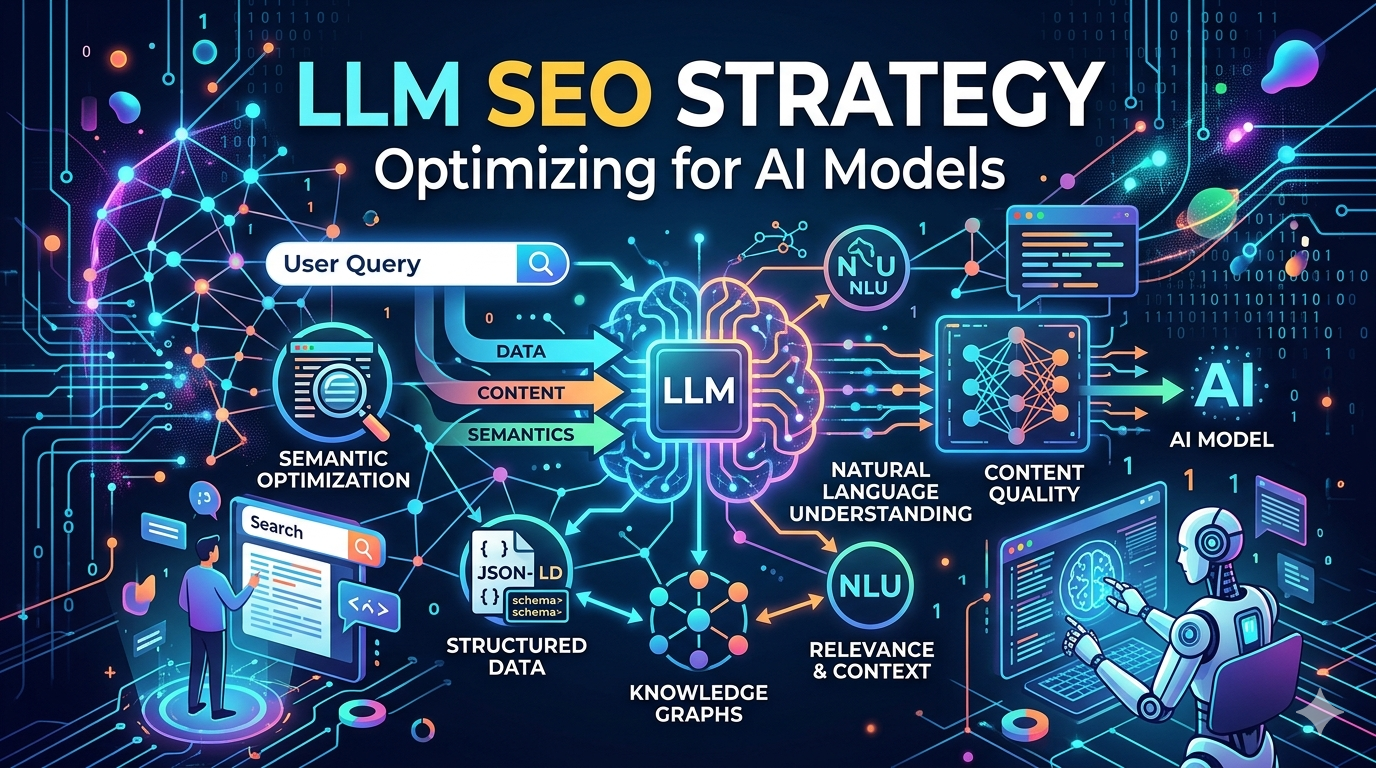

LLM SEO Strategy: Optimizing for AI Models
It’s 2024. Search engines? More than just crawlers now. They’re engaged. Discerning. Learning. That massive data sea? They get it. This isn’t fantasy; it’s Large Language Model (LLM) SEO. Ditch those dusty old tricks. The future of search optimization? A wholly new game. This guide? We’ll dive into adapting your playbook for an AI-centric world. It’s about ranking, yes, but also resonating with these advanced brains.
Today: a deep dive into the world of LLM SEO. The goal? Making your content utterly irresistible to AI. How? By figuring out AI’s consumption habits. Tweaking your writing. Structuring your content for peak AI processing. Prepare to defend your SEO strategy from the future. Unlock fresh streams of organic traffic. This is LLM SEO’s grand entrance. Adapt. Now.
Understanding the LLM Landscape
To truly grasp LLM SEO, you must first understand the playing field. LLMs, imagine Google’s BERT or LaMDA, are advanced AI crafted to process and understand language. They go beyond keywords and links. Instead, LLMs consider the meaning, context, and true intention residing in content. Trained with colossal data troves, LLMs pick up on subtle patterns buried deep within the text.
Consider teaching a kid how to read. At first, they focus on the letters themselves. But, eventually, they start relating different words and understanding the text’s context, and finally, grasping the story. LLMs do something similar, though at an accelerated pace. They examine semantic connections, ID core ideas, and measure the dependability and authority of sources.
This technological shift demands a revolution in SEO strategy. No longer can you just throw in keywords and hope for the best. We need to build resources which are genuinely valuable and made for AI comprehension. This means clarity, relevance, and exhaustive subject coverage.
The Death of Keyword Stuffing: Embracing Semantic SEO
Keyword stuffing? Ancient history. In the present age of LLM SEO, that tactic can hurt you. LLMs are built to identify and penalize artificially boosted content. Instead, embrace semantic SEO. This is about understanding the searcher’s real goals, and delivering comprehensive, contextually relevant info.
Picture this: someone searches “best coffee maker”. They don’t just want a product list. They want to learn what kinds exist, their benefits, and what fits their lifestyle. Your content must tackle these unasked questions and give a complete view. Instead of repeating “best coffee maker,” use related phrases like “coffee brewing machine” or “espresso maker.”
Semantic SEO means constructing a data-rich experience. One that satisfies user needs. It means rising above simple keywords and centering around meaning and context. By doing so, your content can stand out, connect with your audience, and make you an expert in your niche. Therefore, LLM SEO will become easy.
Optimizing Content Structure for AI Consumption
LLMs don’t just skim content. They process it. They analyze. They pull out the vital stuff. For solid LLM SEO, structure content for effortless AI understanding. Use clear headers. Shorten paragraphs. Incorporate bullet points. Make it readable.
Think: presenting a scientific paper. You don’t throw everything into one massive block of text. Instead, organize data into sections with clear headings, guiding the reader and emphasizing crucial insights with charts. It’s the same thing when optimizing for LLMs. By structuring content logically and using visuals, you make it easier for AI to understand.
Here’s how to improve content for AI reading:
- Use descriptive headings and subheadings: These act as a map, guiding LLMs and marking key topics.
- Break up long paragraphs: Shorter paragraphs are easier for everyone to understand.
- Incorporate bullet points and lists: They highlight key points in an easily digestible style.
- Use images and videos: Visuals add variety and draw the eye.
- Add internal and external links: Links connect and add context.
Follow these principles. Create resources that are educational, captivating, and AI-friendly. This is vital to succeeding at LLM SEO.
Leveraging Schema Markup for Enhanced AI Understanding
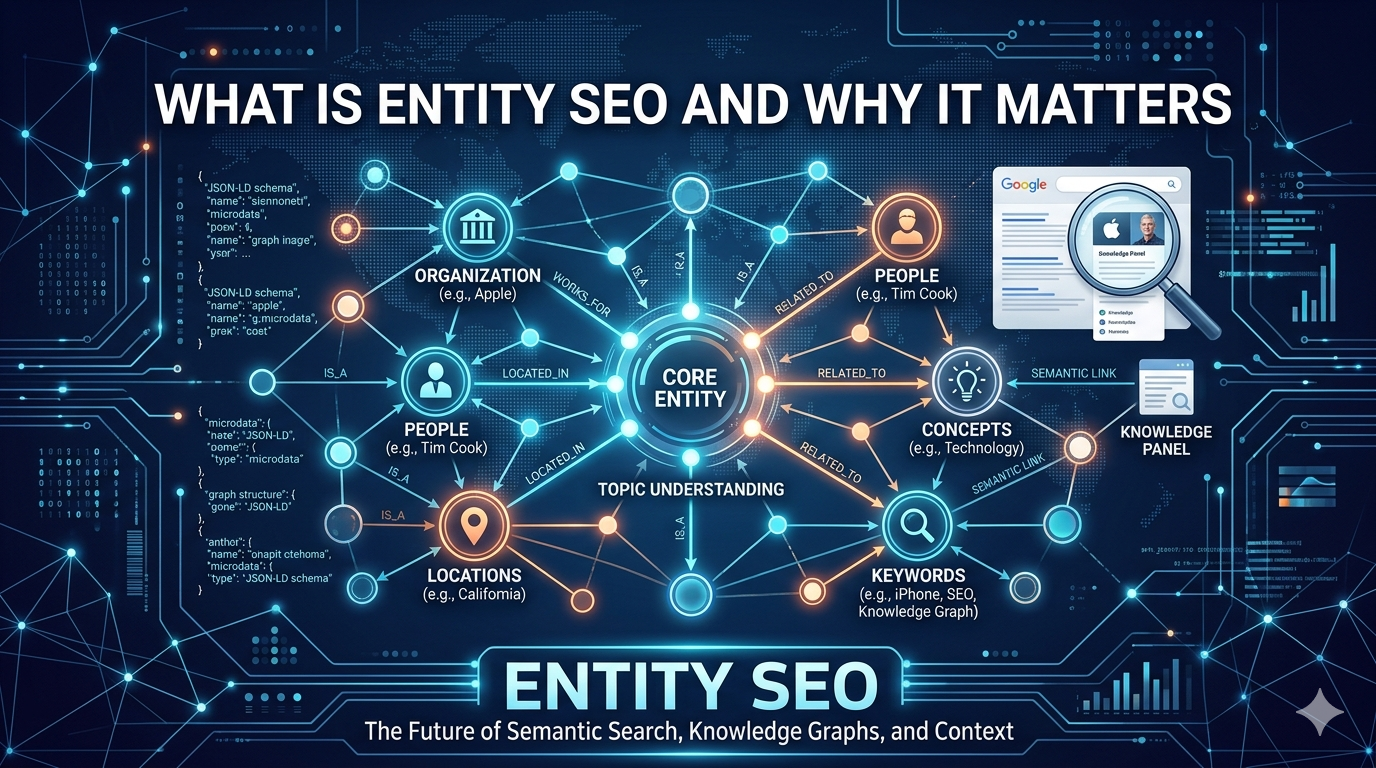
Schema markup? A potent weapon for boosting AI comprehension of your content. It’s structured data, providing search engines with explicit info. Adding schema markup tells search engines what your content is about, who made it, and what the purpose is. This will help them index your content better, improve rankings, and boost visibility.
Think of schema markup as a translator. It bridges the divide between your content and AI algorithms. It delivers a simple rundown, allowing search engines to grasp the critical info. Several types of schema markup exist, for different kinds of content. There’s schema for articles, products, events, and recipes. Using the correct schema gives search engines valuable data and improves content ranking.
Here are ways to boost AI understanding with schema markup:
- Article schema: Use it to tell search engines it’s an article. Give info about the author, date, and headline.
- Product schema: Give details about your products. Examples include name, price, and availability.
- Event schema: Give info such as the date, time, and place.
- Recipe schema: Give ingredients, instructions, and nutritional information.
By using schema markup, you can significantly enhance your content in the eyes of AI algorithms. It is a key part of LLM SEO.
The Importance of E-A-T in the Age of LLMs
E-A-T, which means Expertise, Authoritativeness, and Trustworthiness, has always mattered in SEO. Now, in the age of LLMs, it’s more vital than before. LLMs judge content quality and credibility. E-A-T is a crucial indicator. Content with high E-A-T is more likely to rank well. Imagine E-A-T as a reputation score. It shows how educated, reliable, and trustworthy your content is to people and algorithms alike.
To improve E-A-T, make high-quality, educational content backed by reliable sources. Secure your website and create a clear privacy policy. Build your expert reputation by sharing to industry publications and participating in discussions. Ensure your content is correct and current. By focusing on these factors, you can boost your E-A-T and your rankings in LLM SEO.
Ways to improve E-A-T:
- Create high-quality, educational content: Give useful info that’s correct, current, and well-researched.
- Back up content with reliable sources: Cite and link to good websites.
- Secure your website: Use HTTPS and have a clear privacy policy.
- Build your expert reputation: Share to industry publications and join online conversations.
- Ensure content is correct: Proofread carefully and fix any mistakes.
Optimizing for Voice Search and Conversational Queries
Voice search is popular and growing, and it’s key to improve content for voice. Voice searches tend to be longer and more conversational than typed searches. This means answering specific questions and giving clear answers. Consider the way people actually speak and change your content accordingly. Instead of short, keyword-driven phrases, answer questions naturally. Find common questions about your topic and make understandable answers. Embracing conversation is key in LLM SEO.
Instead of improving for “coffee maker price,” improve for “How much does a good coffee maker cost?” This aligns with how people speak. This increases the chance of ranking for voice searches.
Tips for improving for voice search:
- Answer specific questions: Find common questions about your subject and give clear responses.
- Use natural language: Write conversationally. Avoid jargon.
- Improve for long-tail keywords: Focus on longer, more specific phrases that people use in voice searches.
- Claim your Google My Business listing: This is key for local businesses.
- Ensure your website is mobile-friendly: Voice searches often come from phones.
The Future of LLM SEO: Adapting to Constant Change
LLM SEO changes constantly. It’s key to remain current on emerging styles and practices. AI algorithms are updated and tweaked. What works today might not work tomorrow. This means staying flexible and trying new strategies. Keep a mindset of learning and adapt as needed. Watch your website, track rankings, and examine your traffic to see what works. By staying current, you will ensure content is improved for AI and ranks well. Be proactive, not reactive. Expect change. Improve content now.
The future of search is linked to AI. As LLMs grow more advanced, they are important for understanding content. Embrace LLM SEO. Change your strategy. Protect your website and ensure it succeeds in the age of AI.
Conclusion
LLM SEO is a change to how we optimize search engines. It requires us to shift from keywords and links to focusing on quality and AI comprehension. By understanding and implementing LLM SEO, you can drive organic traffic and become a leader in your industry. Now, it’s obvious that LLM SEO matters.
Key things to remember:
- Understand the LLM world and how AI processes content.
- Use semantic SEO. Move beyond keyword stuffing.
- Improve content structure for AI reading.
- Use schema markup to improve AI understanding.
- Focus on E-A-T to build trust.
- Improve for voice search.
- Adapt to change. Stay current.
Following these guidelines creates content that ranks, connects with readers, and shows your expertise. The future of search is here. It’s driven by AI. Start with LLM SEO. Harness the strength of AI-improved content.
LLM SEO is coming. The internet changes. Adapting is critical for success. Focus on making educational and AI-improved content. Your website will thrive in the world of LLM SEO. Improve your LLM SEO soon.
Using the right strategies can make LLM SEO powerful for driving traffic, building brand awareness, and achieving business goals. Succeed with LLM SEO. It will help you. Implement LLM SEO and watch your online presence thrive. These LLM SEO steps will give you an advantage. They improve LLM SEO. Do it! The value of LLM SEO increases daily. Keep improving LLM SEO.